
When “Protection” Harms: Pregnancy and the Politics of Biomedical Exclusion
by Eliana Nagel
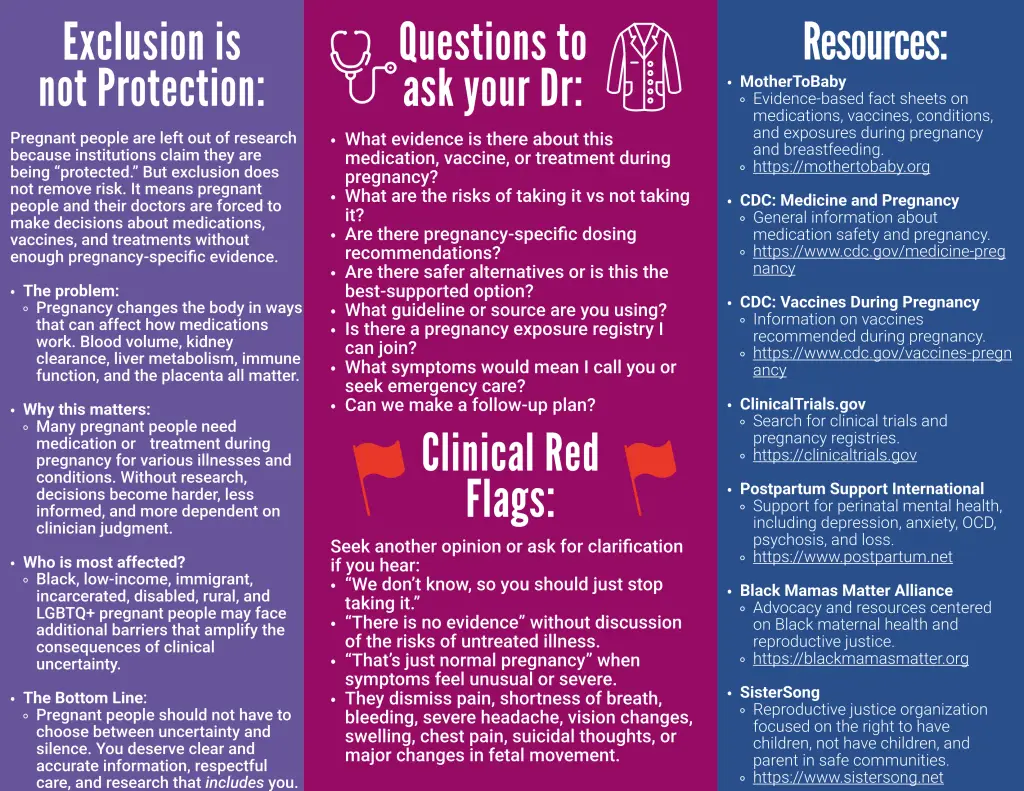
From the author
INTRODUCTION
Modern Western medicine claims to be a discipline built upon and committed to evidence. Clinical guidelines, drug approvals, vaccination recommendations, and standards of care all depend on the authority of scientific knowledge produced through ostensibly neutral and objective controlled research. Yet this commitment to evidence has never been evenly extended to all bodies. The “standard” biomedical subject has historically been imagined as male, white, able-bodied, and relatively uncomplicated by the social conditions that shape health. Pregnant people have occupied a particularly liminal position within this system. They remain largely excluded from biomedical research and clinical trials in the United States, producing profound gaps in knowledge that shape everyday clinical care. This exclusion is typically justified through the language of protection, yet has the paradoxical effect of creating uncertainty in treatment decisions, leading clinicians and patients to navigate risk without sufficient evidence. Moreover, this protection is highly selective, protecting institutions from liability more reliably than protecting pregnant people from harm. It treats research participation as uniquely dangerous while tolerating widespread uncertainty in clinical practice. It frames the fetus as vulnerable but often renders the pregnant person’s health, autonomy, and social conditions secondary. As a result, risk is not eliminated but displaced, shifting from regulated research environments into routine clinical practice.
This practice raises a set of broader questions about how risk is defined and distributed: What does it mean to classify pregnant people as a “vulnerable population,” and who is actually protected by that designation? How do regulatory frameworks that prioritize fetal safety over maternal autonomy shape the production of medical knowledge? And how do these frameworks propagate existing social inequalities in access?
The practical consequences of exclusion are enormous. Medication use during pregnancy is common. Studies estimate that up to 90% of pregnant people are exposed to at least one medication during pregnancy, and at least 60% of people who ultimately give birth take at least one prescription medication while pregnant. Yet safety information remains sparse. The CDC states that fewer than 10% of medicines approved since 1980 have enough information to determine their safety during pregnancy, largely because pregnant people are often excluded from the studies that generate safety evidence. This means that pregnant people and clinicians are routinely forced to make medical decisions under conditions of uncertainty. They must decide whether to continue antidepressants, antiepileptic drugs, antihypertensives, antiretrovirals, asthma medications, diabetes medications, antibiotics, vaccines, or emerging therapies without the same quality of evidence available for nonpregnant patients.
Importantly, these consequences are not evenly distributed across pregnant populations. While some patients (particularly those with greater socioeconomic resources) may be able to access specialized care or navigate uncertainty with greater support, others face heightened risks from the outset. Low-income, Black, immigrant, and incarcerated pregnant people are more likely to encounter structural barriers to care and are therefore more vulnerable to the consequences of uncertain clinical guidance. Plentiful evidence demonstrates that Black pregnant and birthing people in the U.S. experience a maternal mortality rate dramatically higher than white pregnant and birthing people. CDC National Center for Health Statistics data reported that in 2023, the maternal mortality rate for Black people classified in the data as women was 50.3 deaths per 100,000 live births, compared with 14.5 for white people, 12.4 for Hispanic people, and 10.7 for Asian people. In other words, Black pregnant people were more than three times as likely as white pregnant people to die from maternal causes. These disparities cannot be reduced to individual behavior, “compliance,” or biological race. They are produced through medical racism, unequal care infrastructures, environmental exposure, chronic stress, surveillance, and the devaluation of Black reproductive life.
The exclusion of pregnant people from research must therefore be understood as part of a larger political economy of reproductive health. It is not just a technical problem of trial design, but rather it is connected to the historical regulation of reproduction, the racialized construction of maternal worth, the criminalization of poor and Black pregnancy, the gendered expectation of self-sacrifice, and the biomedical tendency to treat some bodies as “too complicated” to study.
In this paper, I will argue that the exclusion of pregnant people from clinical research does not function as an ethical safeguard. Rather, it produces a form of epistemic and structural harm by relocating risk into clinical practice and disproportionately burdening marginalized populations. While this pattern is visible across multiple areas of medicine, I will focus primarily on the exclusion of pregnant people from COVID-19 vaccine and treatment trials as a contemporary case study that makes these dynamics especially visible.
The “Problem” of Pregnancy
Biomedical research depends on abstraction. To study a drug, vaccine, or intervention, researchers define a population, control variables, exclude confounders, and produce generalizable findings. Yet the process of deciding who counts as a generalizable subject is anything but neutral. For much of the twentieth century, the imagined universal subject was not universal at all. Rather, it was implicitly male, white, nonpregnant, able-bodied, and often relatively young or middle-aged. Women, racial minorities, pregnant people, disabled people, older adults, and people with complex comorbidities were frequently treated as deviations from the norm rather than as populations worthy of further investigation.
This default-body problem matters because evidence produced in one population does not automatically translate to another. It wasn’t until 1993 that the U.S. Congress wrote the inclusion of women in clinical research into federal law through the NIH Revitalization Act, requiring the inclusion of women and minorities in NIH-funded clinical research. This policy shift responded to feminist health activism and critiques that male-centered research was leaving massive, dangerous gaps in medical knowledge.
However, even after the NIH Revitalization Act was passed, pregnant people remained subject to a separate logic of exclusion, often justified by fetal risk and institutional liability. Pregnancy changes physiology: blood volume expands, renal clearance shifts, hepatic metabolism changes, immune function is modulated, and the placenta introduces a dynamic maternal-fetal interface. Pharmacokinetics and pharmacodynamics differ dramatically during pregnancy, meaning that the dosage, efficacy, toxicity, and side effects of drugs can all differ from nonpregnant populations. Excluding pregnant people therefore does not merely leave a small “special population” unstudied. It leaves clinicians without reliable knowledge about a common physiological state that many millions of people experience annually.
The persistence of this exclusion reveals an integral contradiction. The medical system treats pregnancy as common enough to regulate intensely, but also exceptional enough to exclude from research. Pregnant people are told what to eat, how to sleep, how much weight to gain or lose, whether they should work, what position they should give birth in, and how they should behave postpartum. Yet when the question becomes whether they should be included in trials that could produce evidence to guide their care, pregnancy is reframed as too ethically complex.
The principal problem with this asymmetry is not that fetal risk is altogether irrelevant. It is that fetal risk is often isolated from and prioritized over the health and autonomy of the pregnant person. A fetus does not exist outside a pregnant person’s body, social life, workplace, housing conditions, healthcare access, and disease risk. A framework that protects fetuses by denying pregnant people access to evidence-based medicine ultimately misunderstands pregnancy as a relational physiological condition. It also misrecognizes risk: untreated disease, undertreated disease, delayed vaccination, inappropriate dosing, and medication discontinuation are also fetal risks. Doing nothing is not the neutral solution that scientific authorities claim it to be. Doing nothing is doing harm.
Thalidomide and its Legacy
The contemporary exclusion of pregnant people from clinical research is often negotiated through the memory of thalidomide, one of the most infamous pharmaceutical disasters in recent history. Thalidomide was first developed in West Germany by the pharmaceutical company Chemie Grünenthal in the 1950s and was marketed beginning in 1957 as a sedative and nausea treatment. It was explicitly promoted as unusually safe, so safe in fact, that it could be used during pregnancy. It quickly became widely prescribed in Europe, Australia, Canada, Japan, and parts of Latin America. As nausea and insomnia are common experiences during early stages of pregnancy, thalidomide was frequently used by pregnant people in their first trimester, precisely when fetal limb development and organogenesis are especially sensitive to disruption.
Many infants exposed to thalidomide in utero were born with severe congenital anomalies, most famously phocomelia, a condition in which the limbs are absent or dramatically shortened. Others experienced malformations affecting the ears, eyes, heart, gastrointestinal tract, and internal organs. The full scale of the crisis was difficult to detect at first because birth defects were geographically dispersed, pregnancy exposures were not always documented, and clinicians lacked a coordinated pharmacovigilance system for identifying teratogenic patterns. Eventually, physicians made the connection between thalidomide use during pregnancy to the striking rise in congenital abnormalities. By the early 1960s, the association had become undeniable, and the drug was withdrawn from many markets.
Notably, the U.S. occupies a distinctive place in the thalidomide story. Thalidomide was never fully approved for sale in the U.S., largely thanks to FDA medical officer Frances Oldham Kelsey, who refused to approve the application submitted by the American manufacturer Richardson-Merrell. Kelsey expressed concern that the company had not provided adequate safety data. Her insistence on stronger evidence delayed thalidomide’s approval long enough for its teratogenic effects to be confirmed internationally. Kelsey was later celebrated as a regulatory hero, and her role in the crisis was lauded as an example of successful state oversight. However, it would be a mistake to conclude that the U.S.was altogether untouched by the crisis. Before formal approval, thalidomide had been distributed via so-called “clinical investigation” channels to thousands of pregnant patients. This is important to note as it complicates the simplified national narrative in which U.S. citizens were fully spared by regulatory caution. It exposes the weakness of the systems that allowed widespread exposure under the ambiguous category of research or investigational use, and reveals that the boundary between clinical care, pharmaceutical marketing, and research can be dangerously porous.
On a global scale, the consequences of thalidomide were devastating. Estimates are still uncertain, but thalidomide is generally understood to have affected over 10,000 infants worldwide, many of whom died in infancy. Survivors often required lifelong medical care, prosthetics, surgeries, social support, and advocacy for compensation. The crisis also transformed public expectations about drug safety, making visible the fact that fetal development could be profoundly affected by pharmaceutical exposure and that evidenced absence of harm could not be equated with evidenced safety. For regulators, clinicians, and the public, thalidomide became a symbol of the catastrophic consequences of inadequate testing.
The ethical lesson drawn from this tragedy should have been that drugs prescribed and used in pregnancy must be rigorously studied. Instead, the dominant institutional lesson became that pregnant people should be kept out of research, for fear of adverse risks, particularly those potentially experienced by the fetus or infant. This inversion is crucial. The facts demonstrate that thalidomide was not a tragedy caused by the unavoidable and unforeseeable risks of ethical inclusion of pregnant people in well-regulated research. Rather, it was an entirely avoidable tragedy of insufficient evidence, inadequate oversight, and widespread clinical use without proper study. The response, however, helped consolidate a culture in which exclusion came to stand in for protection.
That culture was formalized via regulatory practice. In 1977, the FDA issued guidance excluding “women of childbearing potential” from early-phase drug trials, primarily out of concern for fetal exposure. Although later policy shifts encouraged broader inclusion of women, the effects of the 1977 approach were durable. Women who could become pregnant (the vast majority of women aged 15 to 49) were treated as risky subjects, while pregnant people were even more firmly positioned outside ordinary research. While the NIH Revitalization Act of 1993 helped address the underrepresentation of women and minorities in NIH-funded research, pregnancy remained caught in an entirely separate risk schema. Exclusion, otherwise framed as avoidance, becomes attractive to institutions because it appears to be ethically conservative. It reduces liability, simplifies protocols, lowers the need for fetal monitoring, and avoids public controversy. But avoidance also produces what feminist bioethicists have described as the “therapeutic orphaning” of pregnant people: they are present in clinical medicine but absent from the research base that informs it.
The legacy of thalidomide still shapes contemporary assumptions. Waggoner and Lyerly describe the “shadows of thalidomide” as a powerful cultural and regulatory memory that continues to make pregnancy appear uniquely dangerous in a research context. This memory is not irrational, after all, past harm matters. But when memory becomes the justification for a blanket prohibition, it prevents the development of more nuanced ethical frameworks.
The Language of Vulnerability
Research ethicists use the language of vulnerability to identify groups that may require additional protections against coercion, exploitation, or undue influence. Histories of medical abuse, from the Tuskegee syphilis study to J. Marion Sims’s nonconsensual gynecological experimentation on enslaved Black women, make clear that research can be violent, exploitative, and structurally racist. However, vulnerability becomes problematic when it is treated as an intrinsic trait of a group rather than a condition produced by sociopolitical factors.
As aforementioned, pregnant people have often been classified as vulnerable because research may affect both the pregnant person and the fetus. However, the language and rhetoric of this classification has largely devolved into paternalism. It assumes that pregnant people cannot weigh risks and benefits for themselves. It positions institutional review boards, regulators, clinicians, and sponsors as more legitimate decision-makers than the pregnant person.
The 2018 revisions to the Common Rule removed pregnant people from the list of populations automatically considered vulnerable to coercion or undue influence. Berkeley’s summary of the 2018 Common Rule notes that pregnant people and people with disabilities were no longer automatically classified as vulnerable, while people with impaired decision-making capacity and economically or educationally disadvantaged people remained listed in vulnerability-related provisions. However, regulatory language has changed faster than institutional culture. Many trial protocols, IRB practices, and sponsor policies still treat pregnancy as a default exclusion criterion. This persistence shows that the problem is not only formal regulation but also what might be called the moral common sense of biomedical institutions. In this common sense, including pregnant people appears risky, while excluding them appears safe. Yet this calculation is incomplete because it excludes the harms of ignorance. True common sense would dictate that pregnancy does not inherently impair decision-making. Pregnant people may face medical risks, social pressures, or unequal care, but those are not the same as incapacity. In fact, all those factors are created by the very culture claiming to protect them, and amplified by their exclusion from research.
How can pregnant people be expected to make informed decisions when there is no reliable evidence to inform them? Feminist bioethics offers an alternative model in answer to this question. Rather than asking whether pregnant people are too vulnerable to participate in research, it asks what forms of vulnerability are produced by being denied evidence, denied therapeutic options, denied autonomy, and denied recognition as full moral agents. Lyerly, Little, and Faden’s argument for the “responsible inclusion” of pregnant people is especially important here. They argue that access to research is not only a potential risk but also a potential benefit and a matter of justice. Exclusion denies pregnant people the possibility of direct benefit, the social benefit of contributing to knowledge, and the downstream benefit of evidence-based care.
Moreover, the language of vulnerability obscures integral differences within pregnant populations. A wealthy pregnant person with private insurance, paid leave, flexible work, access to specialists, and a trusting relationship with clinicians may navigate uncertainty differently from a low-income pregnant person who works in a high-exposure job, lacks transportation, relies on Medicaid, faces medical racism, or fears immigration enforcement and detainment. Treating pregnancy as a uniform vulnerability erases the social conditions that actually structure risk, allowing institutions to claim ethical concern and moral superiority while avoiding deeper questions about race, class, and power.
The Data Gap as Epistemic Injustice
The absence of pregnancy-specific research can also be understood through the concept of epistemic injustice. Miranda Fricker uses the term to describe wrongs done to people specifically in their capacity as knowers. In healthcare, epistemic injustice occurs when patients’ testimony is discounted, when their lived experiences are not recognized as legitimate evidence, or when systems fail to develop the concepts and knowledge needed to understand their conditions. Pregnant people experience both testimonial and hermeneutical forms of epistemic injustice: they may not be believed about their lived experiences, and the research system may not produce the knowledge required to interpret and address those experiences.
The scale of the pregnancy data gap, a form of institutionalized hermeneutical injustice, is striking. The CDC states that fewer than 10% of medicines approved since 1980 have enough information to determine safety during pregnancy. A 2025 discussion of post-approval safety activities similarly notes that fewer than 10% of medicines approved since 1980 have sufficient information to assess safety during pregnancy. This is especially troubling because medication use during pregnancy is nearly universal, and on the rise. Mitchell and colleagues found that first-trimester prescription medication use increased by more than 60% over three decades, and the use of four or more medications more than tripled. There is a clear contradiction: pregnant people frequently use medications, but the research system has failed to sufficiently study medication use in pregnant people.
This contradiction in turn produces a morally unstable clinical environment. A physician may know that untreated disease poses serious risks to both the pregnant person and fetus. Yet the medication label may lack adequate pregnancy-specific evidence, and clinical guidelines may be based solely on observational data, animal studies, registries, or expert consensus. This does not mean such treatment is inappropriate, but it does mean that the system has transferred the burden of uncertainty to the clinical encounter.
Thus, the rhetoric of “informed choice” becomes further abstracted. As mentioned in the above section, for choice to be meaningful, the information necessary to make that choice must exist. Pregnant people are told to weigh risks and benefits, but the evidence needed to weigh those risks has not been produced. This converts structural ignorance into individual responsibility. If the patient continues medication and an adverse outcome occurs, they may blame themselves or be blamed by others. If they discontinue medication and relapse or experience disease progression, they may also blame themselves or be blamed by others. Either way, the institution that failed to generate evidence is successful in disappearing from view.
A Case Study: COVID-19
The COVID-19 pandemic opened a window of highly accelerated biomedical research and simultaneously exemplified the harms of pregnancy research exclusion. Vaccines, antivirals, monoclonal antibodies, and treatment protocols were developed across the globe at remarkable speed. Yet pregnant people were once again positioned at the margins of evidence production, even as pregnancy emerged as a risk factor for severe illness.
Early CDC data showed that among reproductive-age people with SARS-CoV-2 infection, pregnancy was associated with increased risk of hospitalization, ICU admission, and mechanical ventilation. The CDC also noted that Hispanic and non-Hispanic Black pregnant people appeared disproportionately affected by SARS-CoV-2 infection during pregnancy. A later CDC MMWR update found increased risk for ICU admission, invasive ventilation, ECMO, and death among pregnant people with symptomatic COVID-19 compared with nonpregnant reproductive-age people.
Simultaneously, pregnant people were being excluded from the early vaccine trials. Pfizer and Moderna excluded pregnant and lactating people from their initial mRNA COVID-19 vaccine trials, even though there was no clear biological evidence requiring blanket exclusion. In fact, an analysis of COVID-19 vaccine trials found that among 90 vaccine trials, 88 excluded pregnant individuals, meaning 97.8% excluded them. Unfortunately, the consequences were predictable. When vaccines became available, pregnant people faced an impossible decision: accept vaccination without pregnancy-specific trial data or remain unvaccinated despite elevated risk from COVID-19 infection. Moreover, the exclusion was not limited to vaccines. Among 495 treatment trials, 350 excluded pregnant individuals, meaning 70.7% excluded them. Other reviews similarly reported widespread exclusion of pregnant people from studies of interventions relevant to severe disease.
Consequently, the effects extended into vaccine uptake. CDC analysis of COVID-19 vaccination coverage among pregnant people found substantial racial and ethnic inequities: vaccination coverage before or during pregnancy was 29.9% among Black pregnant persons and 28.3% among American Indian/Alaska Native pregnant persons, compared with 47.5% among white pregnant persons. These disparities reflected access barriers, historical and ongoing medical racism, distrust rooted in justified experiences of medical neglect and exploitation, inconsistent recommendations, and the absence of early pregnancy-specific trial data. This exemplifies how exclusion can interact with preexisting inequalities to produce and amplify stratified uncertainty. For some pregnant people, uncertainty was buffered by access to trusted physicians, paid leave, online resources, and social networks of healthcare professionals. For others, uncertainty was compounded by medical mistrust, limited prenatal access, employer pressure, transportation barriers, and exposure risk.
Ironically, COVID-19 also demonstrated how quickly pregnancy-specific evidence can be generated once institutions decide it matters. After the initial vaccine rollout, observational studies, registries, v-safe data, and cohort studies accumulated evidence supporting the safety and benefits of COVID-19 vaccination in pregnancy. Preliminary findings from the CDC v-safe pregnancy registry and related surveillance systems helped reassure clinicians and patients. But this evidence arrived after millions of pregnant people had already been forced to make decisions without it, and that delay cost thousands their well-being and their lives.
Beyond COVID-19
The same dynamics at play during the COVID-19 pandemic appear across many areas of medicine. Mental health is a particularly critical example. Pregnant people with depression or anxiety are often advised to discontinue antidepressant medications because of concern about fetal exposure. Yet untreated perinatal depression is associated with serious risks, including relapse, impaired functioning, inadequate nutrition, substance use, suicide, preterm birth, low birth weight, postpartum depression, and impaired bonding. A narrowed focus on fetal drug exposure can obscure the risks of untreated mental illness.
This framing reflects a gendered moral expectation that pregnant people should accept suffering to avoid even hypothetical fetal risk. Medication use becomes morally charged, while untreated illness is trivialized and dismissed. The pregnant person is expected to manage uncertainty through self-sacrifice, and research exclusion reinforces this dynamic by failing to produce the evidence needed to make treatment decisions less morally and clinically fraught. Another notable example is that of the AIDS crisis. Early exclusion of pregnant people from HIV research delayed the knowledge of vertical transmission as well as the development of effective prevention strategies. Once antiretroviral therapy during pregnancy was studied and implemented, perinatal HIV transmission declined dramatically. In high-resource settings, appropriate treatment can reduce transmission to below 2%. This history shows that including pregnant people in research can protect both pregnant people and infants. It also challenges the false opposition between fetal safety and pregnant people’s health.
Many other medical conditions reveal the same pattern. Pregnant people with epilepsy may need medication adjustments because pregnancy changes drug metabolism and seizure control. Pregnant people with hypertension require evidence-based management to reduce the risk of stroke, preeclampsia, fetal growth restriction, and preterm birth. Pregnant people with lupus or other autoimmune diseases may need immunosuppressive therapy to prevent flares. In each case, untreated or undertreated disease can be dangerous. Rather than removing that danger, exclusion from research makes it even harder to manage.
The pattern across these examples is clear. Pregnant people are not excluded only from exceptionally rare or experimental interventions. They are excluded from research on common conditions and treatments that directly impact their day-to-day well-being. This is not an isolated ethical caution but a structural feature of biomedical knowledge production.
Reproductive Justice and Racial Politics
A robustly radical feminist analysis of pregnancy research exclusion must move beyond mainstream feminist emphasis on individual informed consent. Of course, consent matters, but it is often insufficient. Reproductive justice, developed by Black feminist activists and organizations such as SisterSong, offers a far broader framework: the right to have children, the right not to have children, and the right to parent children in safe and sustainable communities. This framework shifts attention from isolated medical decisions to the structural conditions that make reproductive autonomy possible or impossible.
Dorothy Roberts’ Killing the Black Body is central to this analysis because it demonstrates how reproduction in the United States has long been governed through racial politics. Black reproduction has been alternately exploited, coerced, surveilled, pathologized, and neglected. Enslaved Black pregnant people’s reproductive capacities were treated as property and economic production. After emancipation, Black communities were instead targeted by coercive sterilization, eugenic welfare policies, punitive child welfare systems, and racist narratives about irresponsible reproduction. In contemporary contexts, Black pregnant people remain far more likely to experience disrespect, disbelief, surveillance, and criminalization in medical settings.
The production of medical knowledge cannot be divorced from reproductive governance. Deciding whose bodies are studied, whose outcomes are prioritized, whose risks count, and whose suffering is urgent are all political acts. The absence of pregnancy-specific data is not an unintentional scientific oversight. Rather, it is part of a broader pattern in which marginalized groups are expected to bear risk without being centered as knowledge subjects.
U.S. maternal mortality data make this point unavoidable. As detailed in the introduction, in 2023, the CDC reported a maternal mortality rate of 50.3 deaths per 100,000 live births for Black people categorized as women, compared with 14.5 for white people. Furthermore, KFF’s 2025 synthesis of maternal and infant health disparities notes that the Black-white disparity persists across education and income levels, including higher pregnancy-related mortality among Black people with college education than among white people with less than a high school diploma. This directly negates those that try to attribute disparities primarily to poverty, education, or individual health behavior. Socioeconomic resources and education matter, but clearly they do not shield Black pregnant people from medical racism.
When evidence is missing, clinicians rely more heavily on judgment, norms, assumptions, and discretionary decision-making. In a medical system built upon and operated with racist politics, discretion cannot be neutral. Plentiful studies demonstrate that Black patients’ pain is undertreated and their symptoms are more likely to be dismissed. Their concerns are more likely to be interpreted through stereotypes about noncompliance, exaggeration, or irresponsibility. The less clear the evidence, the more space there is for bias to shape care. Therefore, research exclusion and racial disparity are connected not only because Black pregnant people have worse baseline outcomes, but because scientific uncertainty amplifies discriminatory treatment. When guidelines are vague, when safety data are limited, when risk communication is inconsistent, and when treatment decisions are individualized without structural support, marginalized patients are the ones that are least protected.
Structural Violence and Further Intersections
Paul Farmer’s concept of structural violence clarifies why pregnancy research exclusion is not merely a technical failure, but a form of harm produced through social arrangements that place certain people in danger while appearing to be neutral. Exclusion does not injure through a single visible event, instead working cumulatively through missing data, delayed recommendations, undertreatment, mistrust, and unequal access to evidence-based care. While race is central to the politics of pregnancy research exclusion, it also intersects with class, immigration status, incarceration, disability, and gender identity and structural violence is intensified by these intersections. These factors shape who has access to care, who can participate in research, who is believed, and who bears the greatest burden of medical uncertainty.
Socioeconomic status drastically affects the ability to navigate incomplete evidence. A pregnant person with private insurance, paid leave, transportation, internet access, and proximity to academic medical centers may be able to seek second opinions, consult specialists, or access emerging research. A low-income pregnant person may not have those options. Medicaid coverage gaps, lack of paid leave, childcare responsibilities, transportation barriers, and under-resourced clinics all limit access to specialized guidance. When evidence is weak, the burden shifts to individual advocacy, but that advocacy requires sufficient resources.
Immigrant pregnant people face additional barriers. These may include lack of insurance, language barriers, fear of deportation, unfamiliarity with the healthcare system, discrimination, and exclusion from public benefits. For undocumented pregnant people in particular, seeking care may feel risky if medical systems are perceived as being connected to state surveillance and enforcement agencies. For non-English-speaking pregnant people, risk communication about medications, vaccines, or trials may be inaccessible or poorly translated. If research inclusion efforts do not address language access and immigration-related fear, they will primarily benefit pregnant people that are already well-connected to healthcare systems.
Incarcerated pregnant people face some of the most severe forms of reproductive constraint. They often lack autonomous control over prenatal care, nutrition, movement, medication access, labor conditions, and even postpartum contact with their infants. Data on pregnancy in prisons and jails is highly limited, but studies by Sufrin and colleagues show that pregnancy is very much a reality within carceral systems. In a rather troubling contradiction, incarcerated pregnant people may be excluded from research that could improve their care while also being included in systems of prolific surveillance, punishment, and control.
Structural violence also reframes the meaning of “risk.” Biomedical discourse often treats risk as if it resides primarily in individual bodies. Yet many of the so-called “risk factors” are themselves produced by structural conditions. For instance, hypertension and diabetes are shaped by food systems, chronic stress, housing, environmental exposure, healthcare access, and racism. COVID-19 exposure was shaped by occupation, crowded housing, public transportation, and the ability or inability to work remotely. Vaccine uptake was shaped by trust, access, paid time off, transportation, and risk communication. To treat these risks as individual characteristics obscures the political and economic conditions that produce them.
While it is not feasible to address all the possible intersections that compound and complicate pregnancy research exclusion within the scope of this paper, it is clear that exclusion is not experienced uniformly. The category “pregnant people” contains profound differences in power, access, risk, and vulnerability. For each group, missing data interacts with existing forms of constraint and research exclusion compounds these inequities. If marginalized pregnant people are underrepresented in trials, the resulting evidence may not apply to those most burdened by disease. Even when pregnant people are technically included, trials may still primarily enroll insured, English-speaking, urban, medically connected participants. Inclusion without equity therefore simply propagates exclusion in a subtler form. Therefore, responsible inclusion must be intersectional, not merely additive.
Reform and Ethical Alternatives
Recent policy developments show growing recognition that presumptive exclusion is harmful. The FDA has issued guidance on scientific and ethical considerations for including pregnant people in clinical trials. The PRGLAC Task Force recommended expanding research specific to pregnant and lactating populations. The 2018 Common Rule revisions removed pregnant people from automatic classification as vulnerable to coercion or undue influence. While these reforms represent important progress, overall policy change has been slow and incomplete. PRGLAC made 15 recommendations in 2018, but later assessments have found that in actuality, only a small number have been fully implemented. This gap between recommendation and implementation shows that the problem is not only conceptual. It is institutional, financial, legal, and cultural.
Responsible inclusion that is grounded in autonomy, evidence, and justice requires several fundamental shifts:
- Pregnancy should not be a default exclusion criterion. Exclusion should require justification based on evidence and protocols should specify why pregnant people are excluded, what data would be needed to include them, and how pregnancy-specific evidence will be generated if exclusion is temporarily necessary.
- Research should differentiate levels and types of risk. Not all interventions pose the same fetal or maternal risk. A blanket exclusion approach treats all research as if it were equally dangerous, which is scientifically and ethically crude. Minimal-risk studies, pharmacokinetic studies, observational cohorts, vaccine trials with strong preclinical evidence, and trials for life-threatening conditions require expanded and nuanced frameworks.
- Pregnant people should be included early enough for the resulting data to actually matter. Delayed inclusion after widespread clinical use reproduces the same problem. When a drug or vaccine is likely to be used by pregnant people, pregnancy-specific plans should be built into development from the beginning.
- Research must be intersectional. Inclusion should not merely enroll pregnant people as a category but should ensure representation across race, ethnicity, class, language, geography, disability, gender identity, comorbidity, etc. Otherwise, pregnancy inclusion may improve evidence only for the most privileged groups while leaving marginalized pregnant people under-studied.
- Community accountability must be incorporated into research design. Reproductive justice organizations, Black maternal health advocates, disability justice groups, immigrant health organizations, incarcerated people’s advocates, and gender-diverse reproductive health experts should help shape research priorities. Communities know which questions matter, which barriers prevent participation, and which forms of risk communication are credible.
- Liability structures require reform too. Fear of fetal harm litigation is one reason institutions avoid pregnancy research. But the law needs to also recognize the harms of failing to generate evidence. A system that punishes inclusion more than exclusion will continue to incentivize ignorance.
- Reform must occur within a broader reproductive justice framework. Ethical research must be part of a wider commitment to abortion access, universal healthcare, paid leave, housing stability, language access, disability justice, anti-carceral policy, and respectful maternity care.
While this paper argues for the responsible inclusion of pregnant people in research, inclusion is not automatically emancipatory. Feminist analysis must remain attentive to the possibility that inclusion can become another form of surveillance or exploitation. Historically marginalized populations have often been included in medical research under coercive or abusive conditions. Therefore, the demand is not simply “include pregnant people”, it is ethical, accountable, justice-oriented inclusion. Inclusion must not mean pressuring low-income pregnant people into trials because they lack other access to care, recruiting incarcerated pregnant people under conditions where refusal is not meaningful, expanding fetal monitoring in ways that criminalize pregnancy outcomes, or collecting data from marginalized communities without returning benefits.
This caution is especially critical in the post-Roe U.S., as pregnancy is increasingly subject to criminalization and surveillance. In states with abortion bans or fetal personhood laws, research participation, medical records, substance use screening, miscarriage care, and fetal outcomes may all be entangled with law enforcement or child welfare systems. Under these conditions, pregnant people may reasonably fear that medical information could be used against them. A reproductive justice approach therefore insists that research reform must be connected to broader struggles for bodily autonomy, abortion access, privacy, anti-criminalization, universal healthcare, paid leave, housing, environmental justice, and anti-racist maternity care.
CONCLUSION
The systematic exclusion of pregnant people from clinical research has been justified through claims of protection. But protection, as practiced through exclusion, has produced harm. It has created vast gaps in medical knowledge, forced pregnant people and clinicians to make decisions without adequate evidence, delayed public health guidance, and amplified existing inequalities. It has protected biomedical institutions from liability far more consistently than it has protected pregnant people from uncertainty, illness, or death. The history of thalidomide demonstrates why fetal risk must be taken seriously, but this history does not justify blanket exclusion. The ethical response to past pharmaceutical harm should be better research, stronger oversight, and more accountable inclusion rather than the abandonment of pregnant people to clinical uncertainty.
The evidence speaks for itself. Pregnant people commonly use medications, yet fewer than 10% of medicines approved since 1980 have enough information to determine safety during pregnancy. Pregnant people were excluded from 97.8% of COVID-19 vaccine trials and 70.7% of treatment trials in one analysis, despite elevated risk from COVID-19 illness. Black pregnant and birthing people continue to die at more than three times the rate of other racial groups. These are not separate facts. Together, they reveal a system in which the people most burdened by reproductive risk are also the least likely to be centered in the production of medical knowledge.
A reproductive justice analysis reveals what a purely regulatory analysis might miss:
exclusion is not a technical failure but an intentional political practice. It reflects gendered expectations of sacrifice, racialized hierarchies of reproductive worth, capitalist incentives to avoid liability, and biomedical discomfort with complex bodies. It produces epistemic injustice by denying pregnant people the knowledge required for informed care. It produces structural violence by distributing the consequences of ignorance along existing lines of inequality. It is about how institutions use the language of vulnerability to avoid responsibility while pregnant people are the ones that bear the consequences.
The alternative is responsible, accountable, intersectional inclusion grounded in reproductive justice. Pregnant people should not be treated as exceptional bodies outside the boundaries of evidence. They should be understood as central subjects of biomedical research because pregnancy is common, medically significant, and socially stratified. Pregnant people deserve evidence because their lives matter, not only because fetal outcomes matter. It is vital to recognize that uncertainty is itself a risk, ignorance is not neutral, and exclusion is an active choice with prolific consequences. Ethical research must protect pregnant people through knowledge, autonomy, and care, not from knowledge, autonomy, and care.
BIBLIOGRAPHY
- American College of Obstetricians and Gynecologists. (2021). Reproductive health care for incarcerated pregnant, postpartum, and nonpregnant individuals: Committee Opinion No. 830. Obstetrics & Gynecology, 138(1), e24–e34.
- Centers for Disease Control and Prevention. (2025). Medicine and pregnancy: An overview.
- Centers for Disease Control and Prevention, National Center for Health Statistics. (2025). Maternal mortality rates in the United States, 2023.
- Farmer, P. (2004). An anthropology of structural violence. Current Anthropology, 45(3), 305–325.
- Fricker, M. (2007). Epistemic injustice: Power and the ethics of knowing. Oxford University Press.
- Geronimus, A. T. (1992). The weathering hypothesis and the health of African American people. Ethnicity & Disease, 2(3), 207–221.
- Kons, K. M., Wood, M. L., Peck, L. C., et al. (2022). Exclusion of reproductive-aged people in COVID-19 vaccination and clinical trials. Women’s Health Issues, 32(6), 557–563.
- Little, M. O., Lyerly, A. D., Mastroianni, A. C., & Faden, R. R. (2016). Ethics and research with pregnant people: Lessons from HIV/AIDS. In Research Ethics Forum (Vol. 3, pp. 227–246). Springer.
- Lyerly, A. D., Little, M. O., & Faden, R. R. (2008). The second wave: Toward responsible inclusion of pregnant people in research. International Journal of Feminist Approaches to Bioethics, 1(2), 5–22.
- Minchin, J., Harris, G. H., Baumann, S., & Smith, E. R. (2023). Exclusion of pregnant people from emergency vaccine clinical trials: A systematic review of clinical trial protocols and reporting from 2009 to 2019. Vaccine, 41(35), 5159–5181.
- Mitchell, A. A., Gilboa, S. M., Werler, M. M., Kelley, K. E., Louik, C., &Hernández-Díaz, S. (2011). Medication use during pregnancy, with particular focus on prescription drugs: 1976–2008. American Journal of Obstetrics and Gynecology, 205(1),51.e1–51.e8.
- PRGLAC Task Force. (2018). Report to the Secretary, Health and Human Services, Congress: Task Force on Research Specific to Pregnant Women and Lactating Women. U.S. Department of Health and Human Services.
- Roberts, D. (1999). Killing the Black body: Race, reproduction, and the meaning of liberty. Vintage.
- Shankar, M., Gülmezoglu, A. M., Vogel, J. P., et al. (2024). Eliminating gender bias in biomedical research requires fair inclusion of pregnant and gender-diverse people. Communications Medicine, 4, 211.
- Sufrin, C., Beal, L., Clarke, J., Jones, R., & Mosher, W. D. (2019). Pregnancy outcomes in U.S. prisons, 2016–2017. American Journal of Public Health, 109(5), 799–805.
- Sufrin, C., Jones, R. K., Mosher, W. D., & Beal, L. (2020). Pregnancy prevalence and outcomes in U.S. jails. Obstetrics & Gynecology, 135(5), 1177–1183.
- Taylor, M. M., Kobeissi, L., Kim, C., Amin, A., Thorson, A. E., Bellare, N. B., et al. (2021). Inclusion of pregnant people in COVID-19 treatment trials: A review and global call to action. The Lancet Global Health, 9(3), e366–e371.
- S. Food and Drug Administration. (2018/2019). Pregnant Women: Scientific and Ethical Considerations for Inclusion in Clinical Trials: Guidance for Industry.
- Waggoner, M. R., & Lyerly, A. D. (2022). Clinical trials in pregnancy and the “shadows of thalidomide”: Revisiting the legacy of Frances Kelsey. Contemporary Clinical Trials, 119, 106806.

Leave a Reply
You must be logged in to post a comment.