
Birth Control Through the Ages
by Caroline Crosnoe

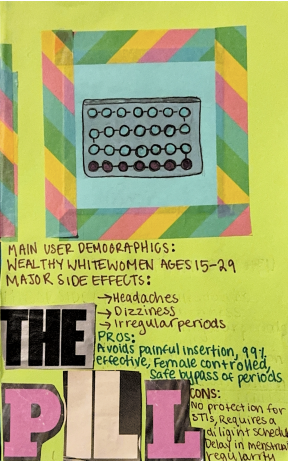

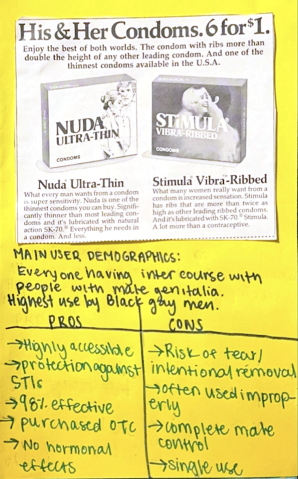
For my generation, the most common form of birth control is the male condom, one that gives women zero control over family planning. While the Pill is also frequently used, it is advertised predominantly to women, rather than the comprehensive audience that condoms reach. I recognized that the exposure to different forms of birth control followed standard patriarchal systems and standards, so I wanted to explore both the history and target demographics of various types of family planning. What I discovered was largely unsurprising: birth control, which is now thought of as a progressive tool, has not always been enforced with the well-being of women in mind. I wanted my zine to reflect the injustices of the history of birth control enforcement. While there are major benefits to the overall population, specifically a newfound autonomy for women and entry to the workforce, the original intent of certain forms of birth control was to control minority communities and limit their reproductive rights.
For example, the release of Norplant was almost instantly manipulated into a tool to promote the sterilization of Black women and teenagers. Additionally, I found continuities between experimentation on enslaved women without informed consent and clinical trials for Norplant and the Pill in the Global South. While these minority communities were directly impacted by the development and rollout of various family planning methods, they were also at the forefront of contraceptive and sexual education advocacy. After the discovery of HIV as a sexually transmitted disease, LGBTQ+ advocacy encouraged condom use across gender, racial, and sexual orientation lines. In addition to the zine, I have included a write-up of the history, target demographics, pros and cons, and major side effects of the Pill, condoms, and Norplant. This contains a chart summarizing both the zine and the write-up, with QR codes of additional family resources inside.

Leave a Reply
You must be logged in to post a comment.