
Domestic Violence in Latin American Families
By Samantha Fornaris, Sofia Malhas, and Sophia Gonzalez
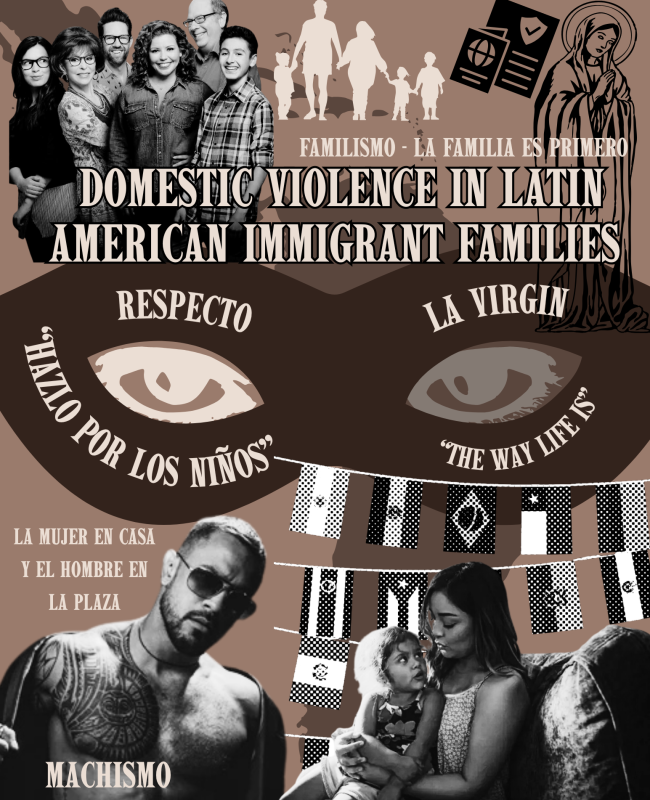
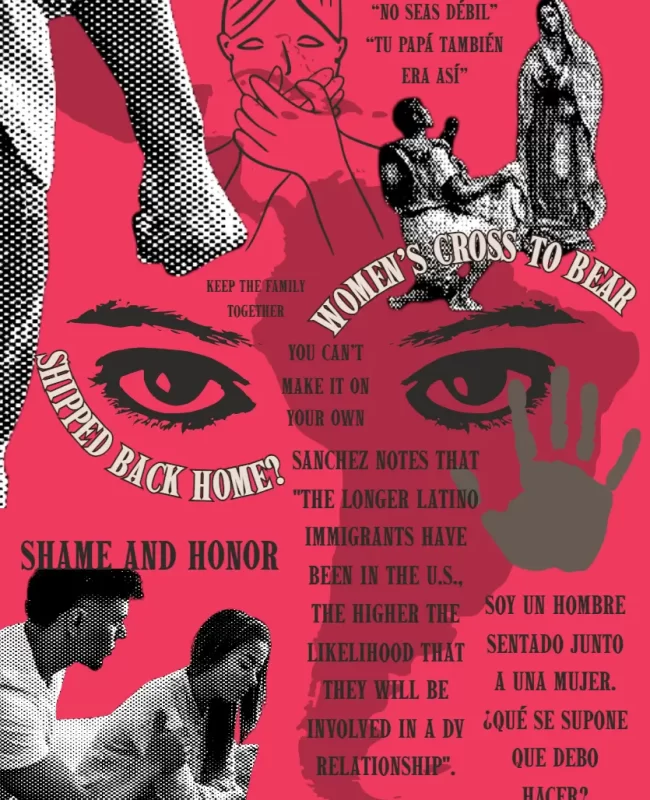


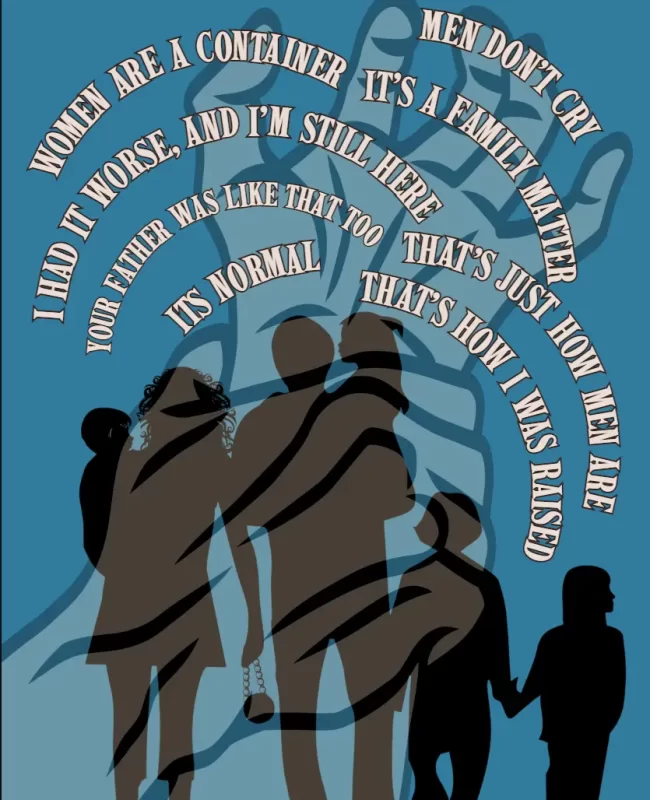








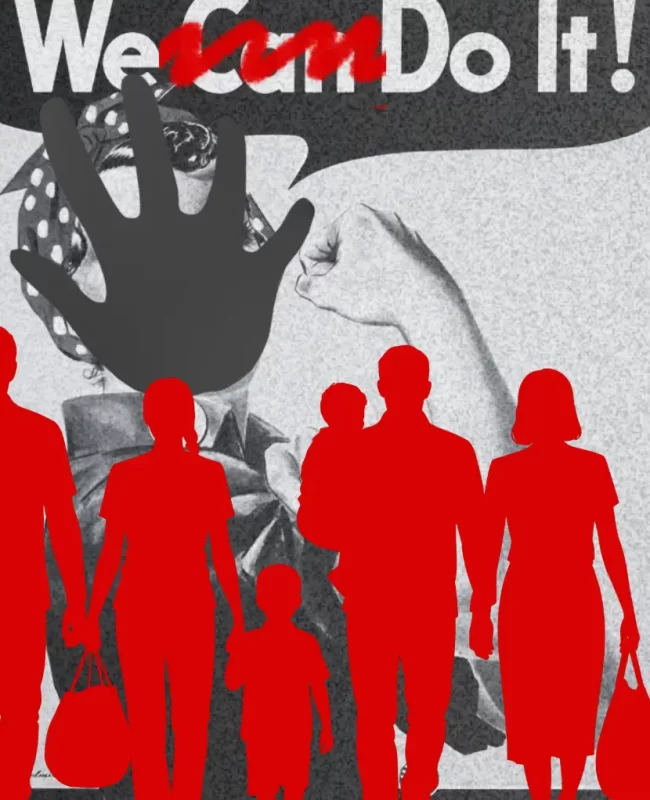

This project looks at how domestic violence gets normalized in Latin American immigrant communities, specifically through three areas we kept coming back to in our research:
1. Immigration and power
2. Religion
3. Masculinity.
Our overall argument is that domestic violence in these communities is not just “part of the culture”, it is the result of a lot of overlapping pressures and systems that, when you look closely enough, can actually be understood and challenged.
Each of us took on a different area of focus. We looked at how the immigration experience can take away a person’s sense of status and power, and how that loss sometimes shows up as violence at home. When someone who was respected in their home country suddenly finds themselves at the bottom of American society, the household can become the one place they feel like they can be in control.
We also looked at religion, especially Catholicism, and how certain teachings around marriage, forgiveness, and the role of women can make it really hard for survivors to leave. Ideas like staying for the family or treating suffering as something noble can keep people stuck in dangerous situations.
And finally we looked at masculinity and machismo. How rigid ideas about what it means to be a man get passed down through families, music, and media, and how those ideas can normalize control and violence in relationships.
When you put all three of these together, it becomes clear that domestic violence in these communities is not caused by any one thing. It is the result of migration stress, religious influence, gender norms, and racial marginalization all working together.
We pulled from a range of sources across sociology, psychology, gender studies, and cultural studies. This included peer-reviewed articles, qualitative research based on the real experiences of immigrant Latinx men and survivors, and an analysis of popular Latin music and film.
Some of the main theoretical frameworks we used were Kleinian object relations theory, which helped us understand how men can project insecurity onto their partners as a way to feel in control; Critical Race Theory, which pushed us to think about domestic violence as connected to larger systems of racism and marginalization; segmented assimilation theory, which looks at how the immigration experience shapes behavior and identity in ways that are not always straightforward; and socioecological modeling, which helped us identify risk factors at the individual, community, and societal levels.
Recommended Texts & Sources:
Mirandé, A. (1997). Hombres y Machos: Masculinity and Latino Culture — a really important text that pushes back against the idea that Latino masculinity is inherently violent or pathological.
Sanchez, D. (2014). Beyond Machismo: A Theoretical Exploration of Domestic Violence in Latino Men — great for understanding the psychological and structural roots of intimate partner violence among Latino men.
Menjívar, C. & Salcido, O. (2002). Immigrant Women and Domestic Violence — covers how things like legal status, language barriers, and isolation make immigrant women especially vulnerable.
Hass, G., Ammar, N., & Orloff, L. (2006). Battered Immigrants and U.S. Citizen Spouses — really eye-opening on how immigration status gets used as a tool of abuse and control.
Da Silva, E. et al. (2018). Marianismo Beliefs, Intimate Partner Violence, and Psychological Distress — helpful for understanding how internalized gender roles affect how Latina survivors experience and respond to abuse.
Jimenez, A. (2017). Machismo Hurts Men Too — a spoken word piece that brings a lot of this research to life from a personal, community perspective.

Leave a Reply
You must be logged in to post a comment.