
by Kate Schwitzgebel, Nadia Vong, and Kian Jamali
In our project, we want to raise awareness of food insecurity and the ways we can help prevent it. Society needs to dismantle structural barriers that prevent communities, especially Black, Brown, Indigenous, and low-income Californians, from having consistent access to healthy food. Food insecurity can impact people of all genders, races, and ethnicities; however, its effects impact marginalized communities even more. Our goal is to put on display the effects of the “savior complex” and how much that can affect true community engagement.
During this project, we kept in mind that we should avoid places that are corporations, companies that are based only in Western states, or that don’t have communities of different
races, genders, or sexualities. It is important to collaborate with people who have experienced food insecurity before, so they can be the ones educating and helping based on their first-hand experience. Nourish California is an example of one of the organizations we looked into. It is a statewide non-profit organization that is dedicated to transforming California’s food systems so that everyone, no matter their income, race, or background, has access to food. Their website states, “They work with an urgent focus on improving access to food for Californians who face the greatest needs and the starkest inequities.” (Kaiser Permanente).
We were also intrigued by Pomona’s food pantry (“God’s Pantry”). It is located in the
town of Pomona, and it is the largest food bank run by formerly incarcerated and gang-affiliated
individuals. They are concerned about food waste in LA County, and they project that 8 million
pounds of food is wasted. This specific food bank was founded in 2012, and it began for the
students of Chino High School who were dealing with food insecurity. The workers there are
working to “discover themselves and their purpose in life by serving the common good of the
communities” they serve. (Gods Pantry, 2020). We went to take a tour of their facility and were
impressed by the amount of community they had. They had a room where you could get tattoos
removed for free, as many of the people they work with were once affiliated with a gang or had a
rough past. In the back, they had a warehouse that held food from companies such as Target,
Walmart, Kroger, and Costco. These companies take the food that they don’t put out on shelves
and donate it to food banks like God’s Pantry.
We liked how they don’t just focus on the people who have food insecurity, but also the workers. They held classes for the workers, who were paid to attend, to learn about parenting,
sobriety, and how to believe in a new life. The scene of having these workers of different backgrounds creates a statement that social injustice can be worked out through the community.
When doing the tour, our tour guide, Martha, gave us a snippet of her story and how she came to be working at God’s Pantry. She shared in detail about her life and we found it amazing that she
can talk so openly about her past of drug abuse, child harm, and her time in jail. We also found it
interesting that they work with big corporations, as it shows they are working across barriers and
not just in the local community of Pomona. This organization isn’t just helping limit food
insecurity, but also giving chances to minorities. We saw people of color, queer people, and
women all working together to fight food insecurity in the local town of Pomona
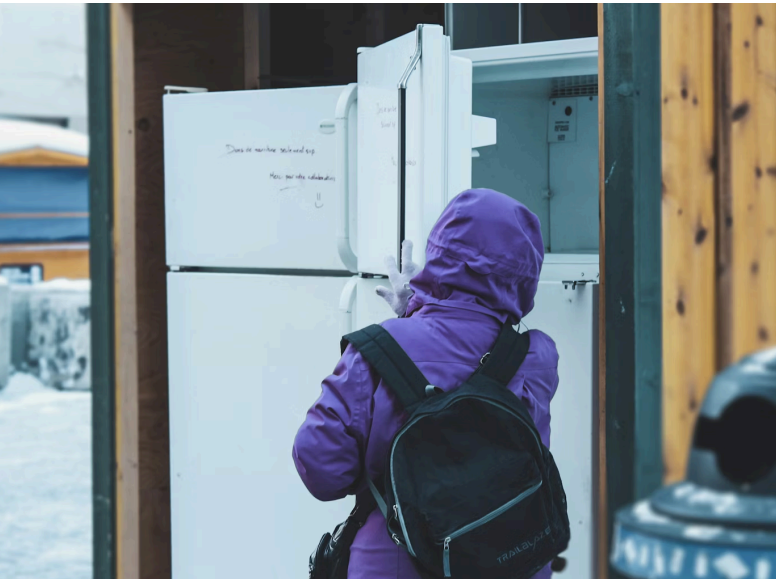
Martha’s Story
(God’s Pantry Pomona, CA)
In Southern California? Want to get involved?
Donate
Sources
California Food Policy Advocates. “Nourish California-Center for Health Equity.”
UCLA Health Equity, https://healthequity.ucla.edu/partners/california-food-policy-advocates/
God’s Pantry. 2020 Annual Report. 2021.
https://www.gods-pantry.org/wp-content/uploads/2021/03/GP-Annual-report-2020.pdf
“Martha’s Story”. YouTube, uploaded by, 5 Aug. 2025,
https://www.youtube.com/shorts/a0zhjI3lsCU