by Hayden Floyd and Sophia Blaschke
This project came from an interest to understand how Oklahoma’s carceral system targets Black, Indigenous, and low-income mothers through intersecting structures of power and inequality. Oklahoma, though having the highest female incarceration rate in the world, cannot be separated from the broader histories of racialized policing, gendered violence, and economic marginalization that shape women’s lives long before a criminal charge is filed. This created a necessity for us to approach this work with an intersectional and anti-racist feminist framework while in an attempt to build solidarity with ReMerge.
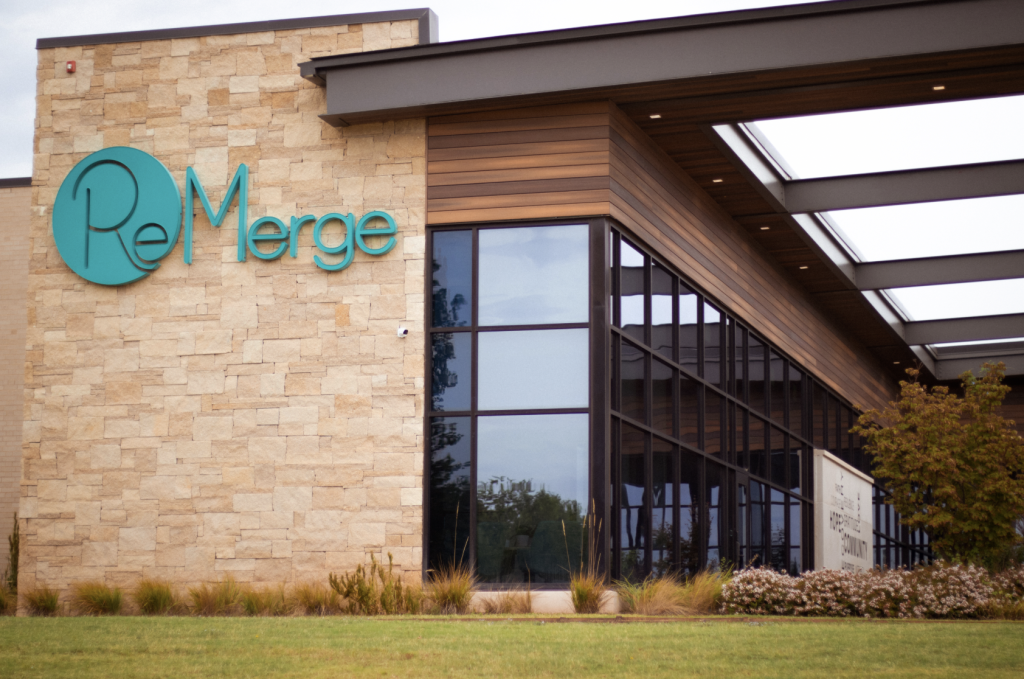
ReMerge is a pre-trial diversion program for high-risk mothers located in Oklahoma City, where they provide access to substance-free housing, food, clothing, addiction recovery, educational classes, and access to mental and physical healthcare services.
We had the pleasure of speaking to ReMerge’s CEO, Erin Engelke, where she emphasized the burdens of trauma, unstable housing, substance use, and limited access to care that the mothers they work with have dealt with in their lives – all disproportionately experienced by Black and Indigenous women in Oklahoma. Through this conversation, we were able to learn not only the systemic origins of women’s criminalization, but what works in terms of support, community, and stability that can break through cycles of incarceration.
We also had the incredible opportunity to speak with and learn from Dr. Romarilyn Ralston, Senior Director of the Claremont Justice Education Center at Pitzer College. Her insight into the carceral system as a formerly incarcerated woman and as an organizer working within higher education taught us the importance of centering lived experience when in an attempt to study incarceration – most research articles published on incarceration are written and researched through the lens of public safety and law enforcement, which does not address the root causes of oppression that leads to incarceration. She spoke to the culture of prisons being harmful – many guards coming from military backgrounds, often leading to seeing folks as enemies that need to be trained and disciplined. We ended our conversation by learning that when rehabilitation programs (ReMerge as an example) are in place, it is crucial to understand that you cannot push someone into healing. Resources can be offered to them which may increase the likelihood of community building and openness to change, but deep down the emphasis has to be on the individual and their willingness to come to said change, to reinvent their lives, have other possibilities and opportunities, and recognize that they are human and deserving.
After our conversation with Dr. Ralston and diving deeper into the idea of positionality and power, we decided that we needed to pivot from only building solidarity, and instead build solidarity while also examining present internal power structures at ReMerge. While we cannot ignore the life changing support that ReMerge offers mothers facing incarceration, we can address inner dynamics that may be reinforcing harmful colonial stereotypes. We noticed that the executive team and much of the leadership at ReMerge is predominantly white, despite working with a population largely composed of women of color. We found issue with this as a mostly white executive board making final decisions about a program grounded in the lives of women of color risks reinforcing colonial patterns, where those with the least lived experience hold the most institutional power.
Once again, we do not want to take away from the fact that ReMerge has done incredible work, but recognizing these internal disparities made us more comfortable as we grappled with understanding how race, class, and positionality operate not only within carceral systems, but also within institutions that are designed to mitigate such harms. As we just explained within the greater context of ReMerge, it was extremely important to us that as white middle-class women we were to stand strong in the idea of learning through this project. In an attempt to build solidarity with ReMerge and Dr. Ralston, we resisted assuming what works/is harmful for incarcerated women and mothers, and instead took a step back and created a space to learn together. We approached this project with the hope of understanding how knowledge, care, and solidarity can be ethically practiced while in conversation with organizations and individuals who work with, or have been impacted by the carceral system in Oklahoma.