Healing as a Resistance: Centering Black Women’s Health Through Antiracist Feminist Praxis
by Marilyse Mukundi, Diya Sinha, and Hana Skigen
References
Arriola, Kimberly R. Jacob, et al. “The Health Status of Black Women: Breaking through the Glass Ceiling.” Black Women, Gender + Families, vol. 1, no. 2, 2007, pp. 1–23. JSTOR, www.jstor.org/stable/10.5406/blacwomegendfami.1.2.0001. Accessed 19 Nov. 2025.
Campbell, Courtney. “Medical Violence, Obstetric Racism, and the Limits of Informed Consent for Black Women.” Michigan Journal of Race & Law, vol. 26, special issue, 2021, pp. 47–74. https://doi.org/10.36643/mjrl.26.sp.medical.
California Black Women’s Health Project. “Reparations.” California Black Women’s Health Project, 2024, www.cabwhp.org/reparations.html. Accessed 19 Nov. 2025.
Dill, Jennifer. “Structural Racism and Black Women’s Employment in the U.S. Health Care System.” Health Affairs, 2022 Doherty, Alcindor, and Bain. “‘We Weren’t Heard Until It Was Too Late’: Navigating Inequities in Healthcare as Black Women in the U.S.” Undergraduate Review, vol. 19, 2025, pp. 139–149.
McKoy, J. “Racism, Sexism, and the Crisis of Black Women’s Health.” The Brink, Boston University, 31 Oct. 2023. National Black Nurses Association. “Workplace Violence Regulations for Healthcare Facilities Go into Effect April 1.” National Black Nurses Association, 2024, https://nbna.org/workplace-violence-regulations-for-healthcare-facilities-go-into-effect-april-1/.
NU-MAC. “Supporting the Physical and Mental Health of New and Expectant Black Mothers.” Northwestern University Counseling and Psychological Services, 8 Nov. 2018, counseling.northwestern.edu/blog/mental-health-counseling-black-women-pregnancy/.
Schumacher, Samantha, et al. “Five Facts about Black Women’s Health.” KFF, 7 May 2024. Washington, Alexis, and Jennifer Randall. “‘We’re Not Taken Seriously’: Describing the Experiences of Perceived Discrimination in Medical Settings for Black Women.” Journal of Racial and Ethnic Health Disparities, vol. 10, 2023, pp. 883–891. https://doi.org/10.1007/s40615-022-01276-9. White, Emily. “Racial Disparities in Women’s Health.” Network for Public Health Law, 1 Aug. 2022.
The Treatment of Women and Transgender People in the CA Prison Industrial Complex
The Treatment of Women and Transgender People in the CA Prison Industrial Complex
by Anonymous
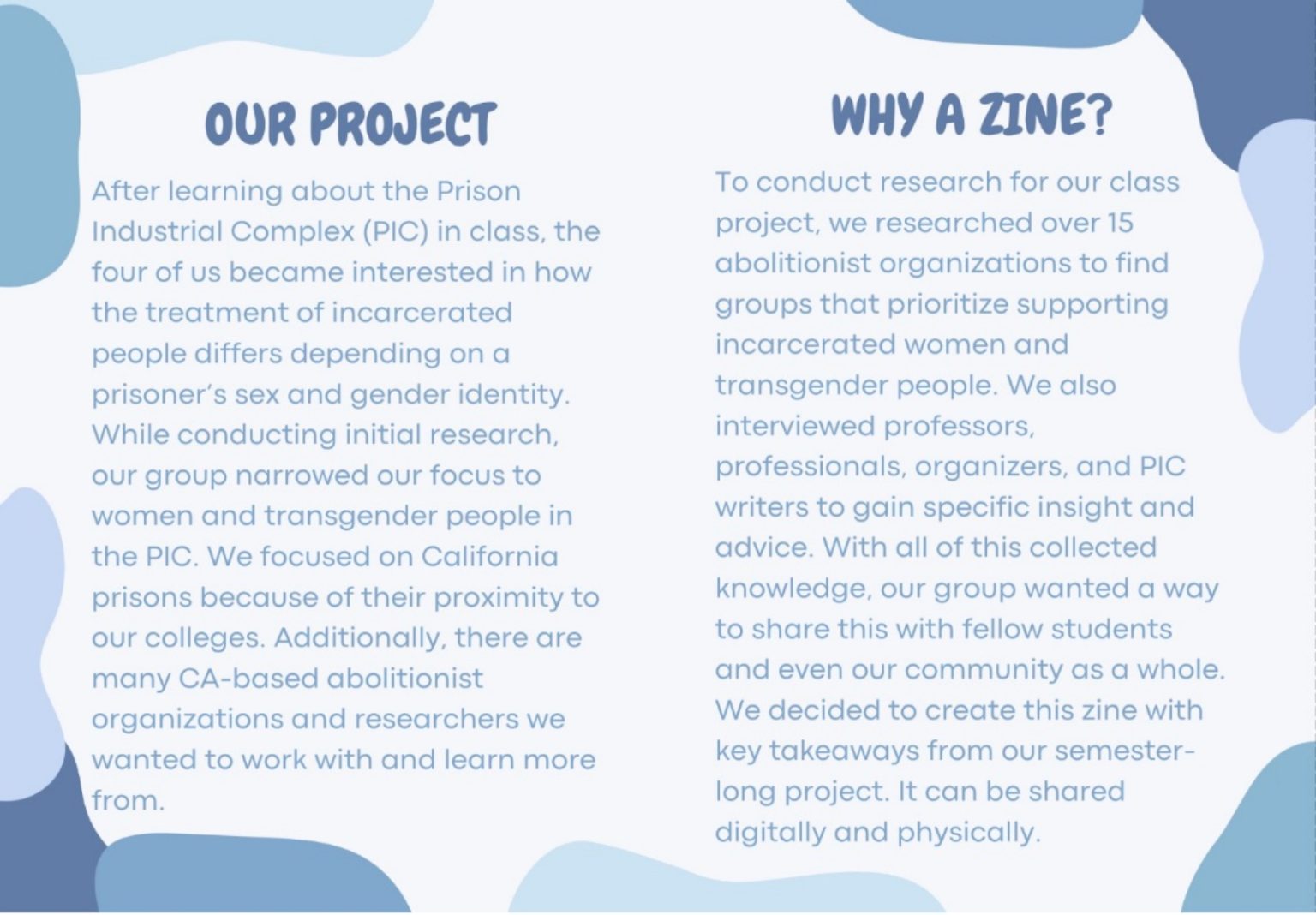
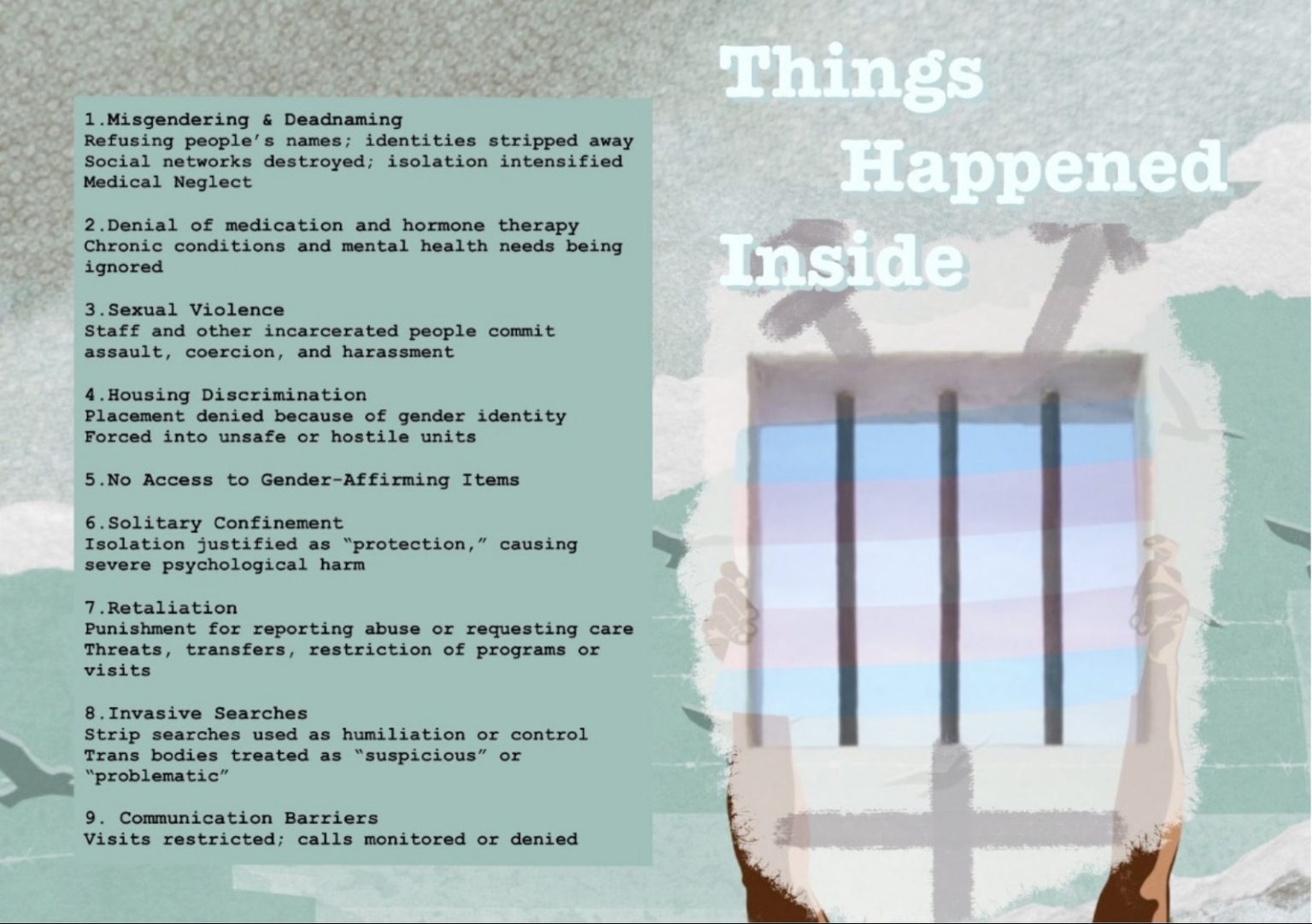
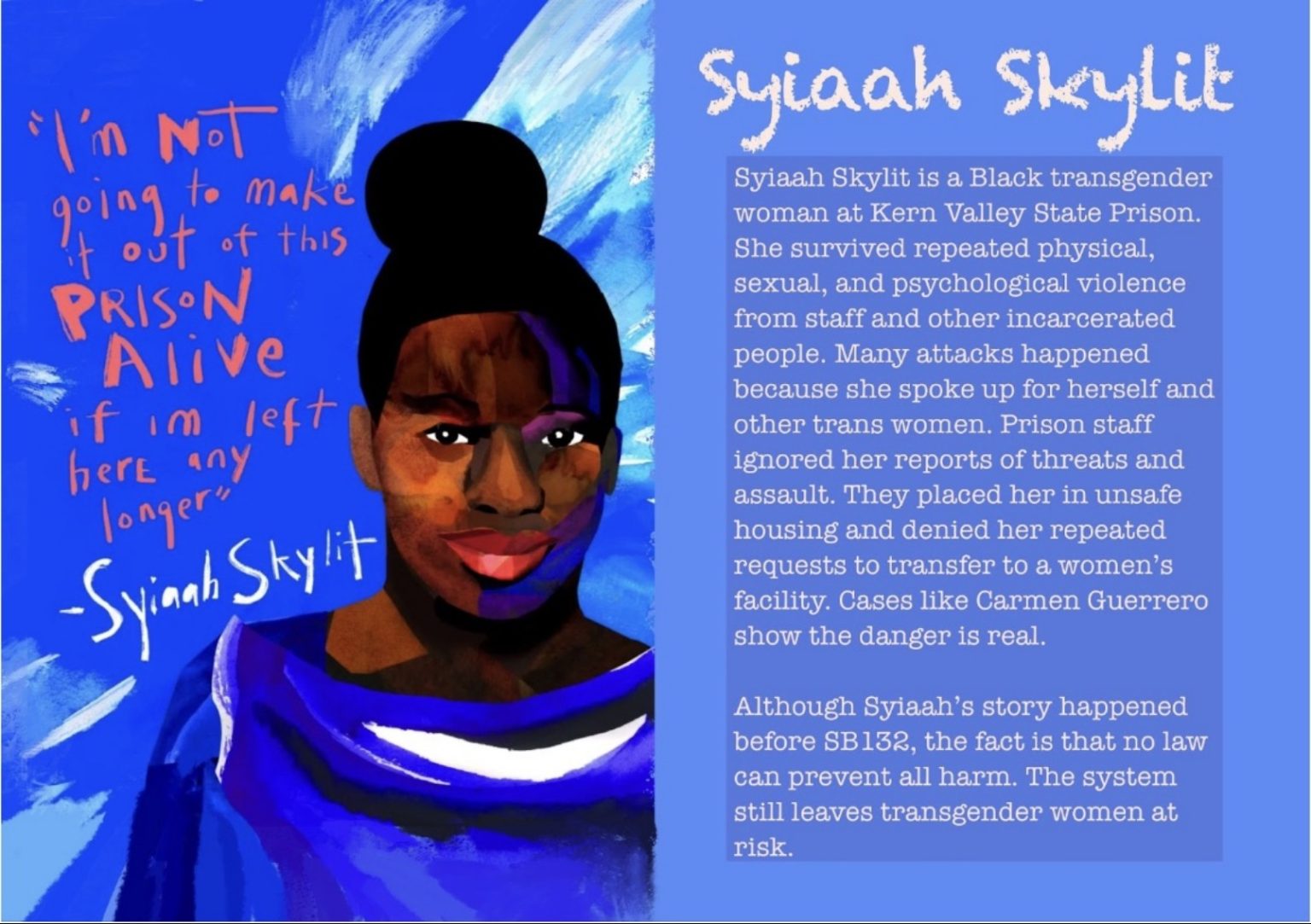
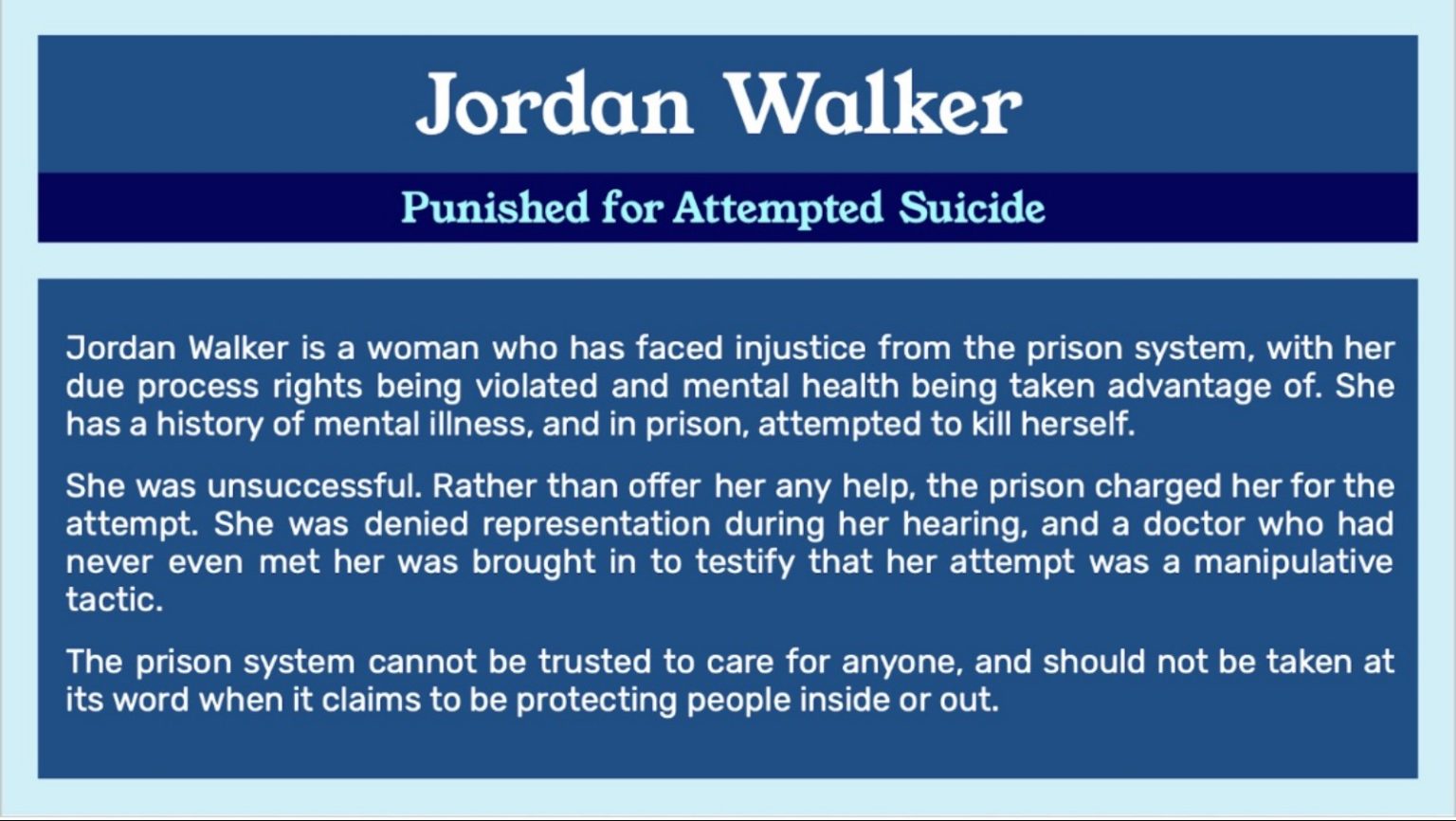
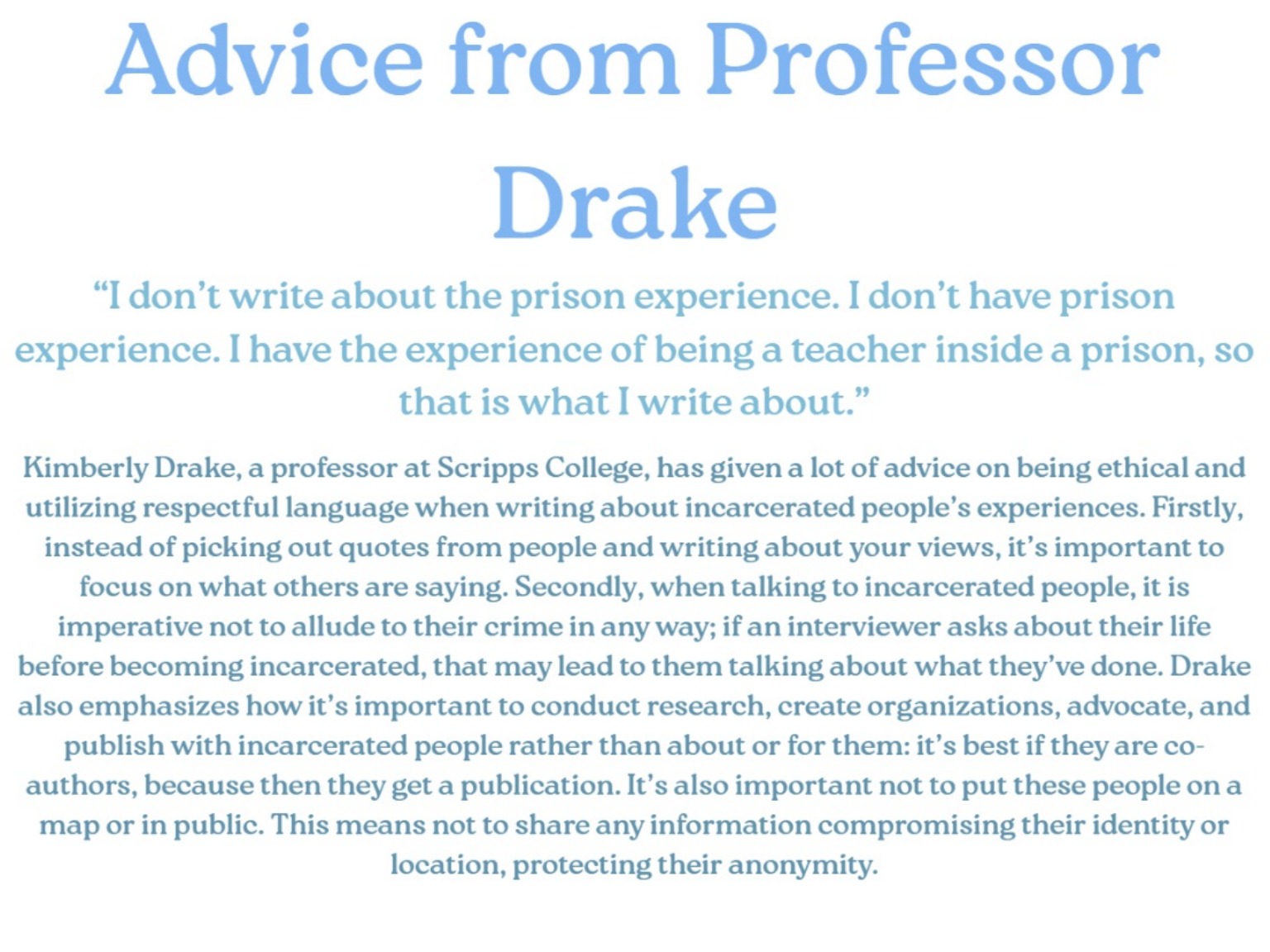
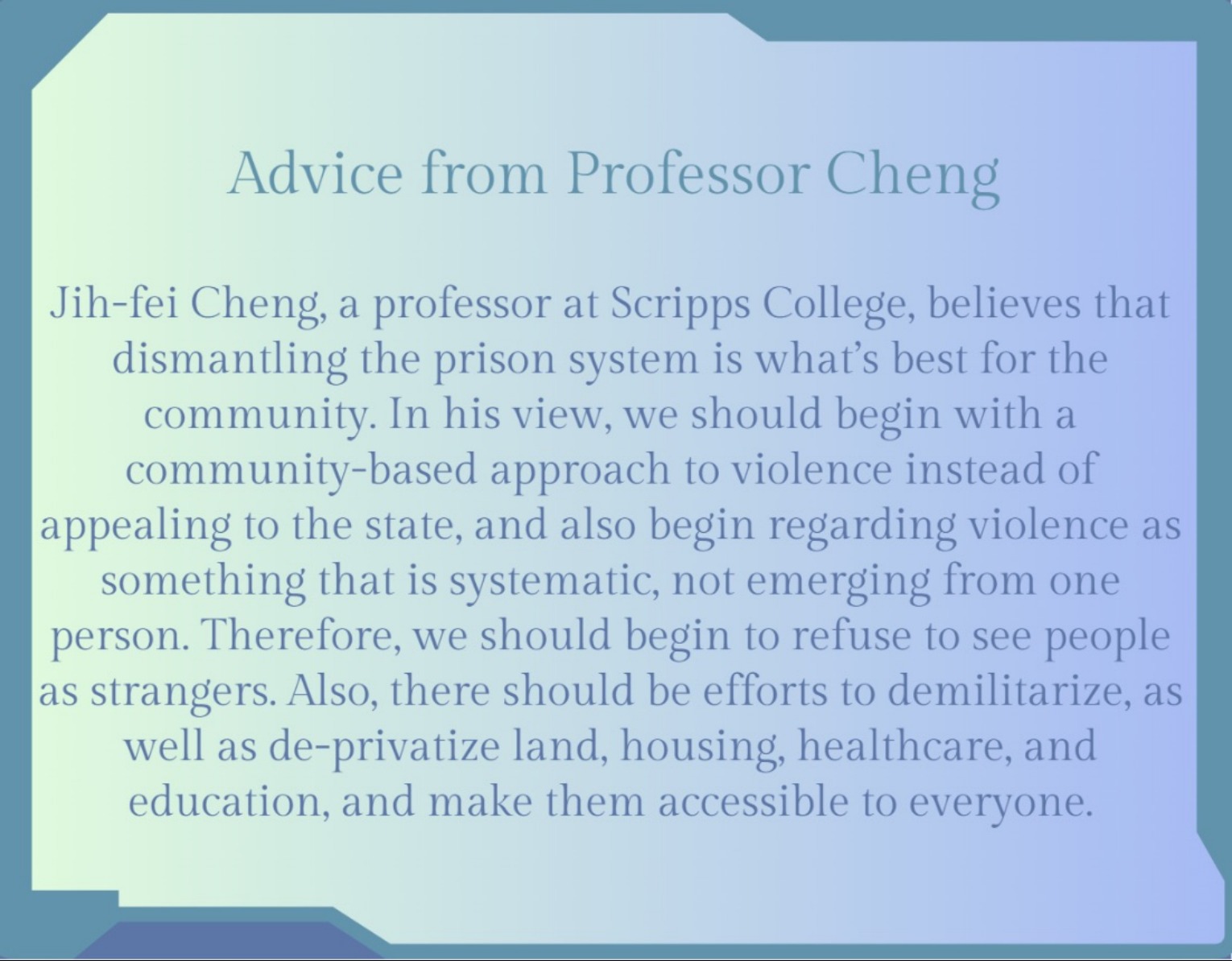
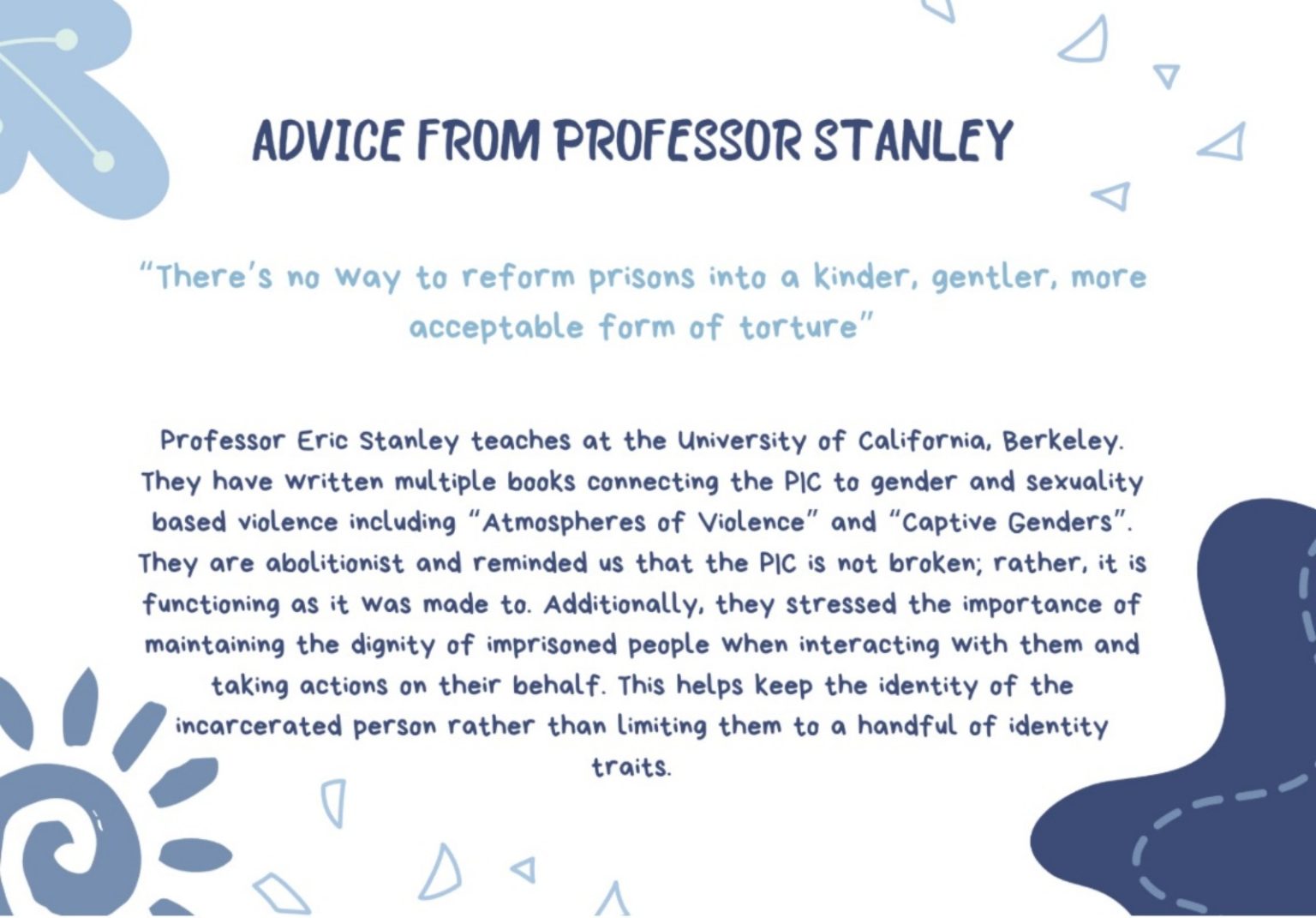
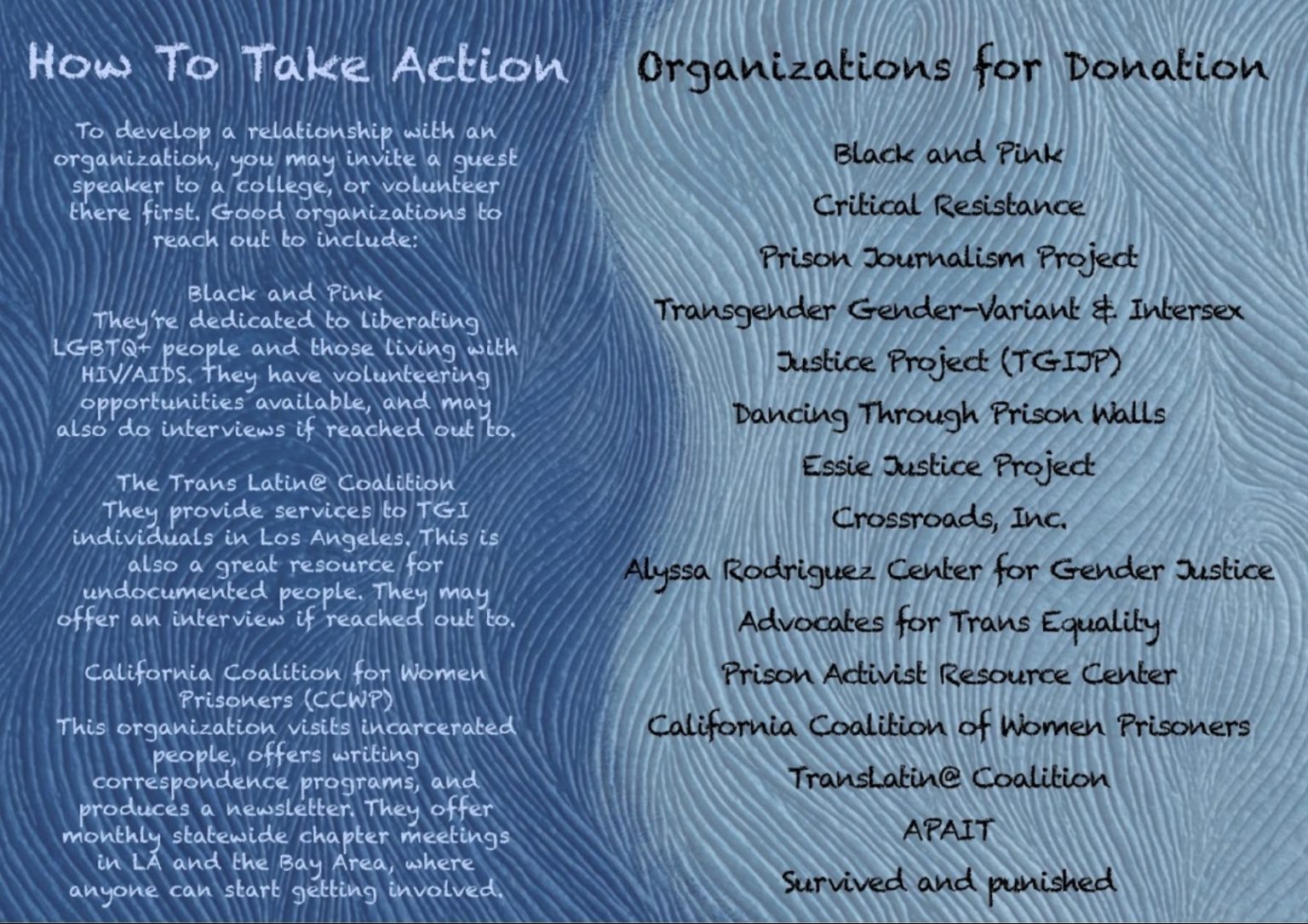
The purpose of our project has been to educate others on the treatment of women and trans people in the PIC. We have interviewed professors and researched organizations, in order to make a list of places that would be good to volunteer at and interview. We hope that this educational zine helps give readers abolitionist-based actions they can take to fight this system of oppression. Our gathered research is especially useful for fellow students to know. In our zine shared the advice professors gave us on how to be ethical when publishing information about the lives of those in prison. Our project also expresses the importance of abolitionist action and intersectional research approaches. We also added specific stories of people who have been incarcerated and how they have been mistreated within the PIC. There is still much to be done to reform and abolish prisons; yet, in the meantime, students must recognize those most vulnerable to oppressive systems and take available action.
ReMerge and Women’s Incarceration in Oklahoma: An Analysis of Positionality and Power
ReMerge and Women’s Incarceration in Oklahoma: An Analysis of Positionality and Power
by Hayden Floyd and Sophia Blaschke
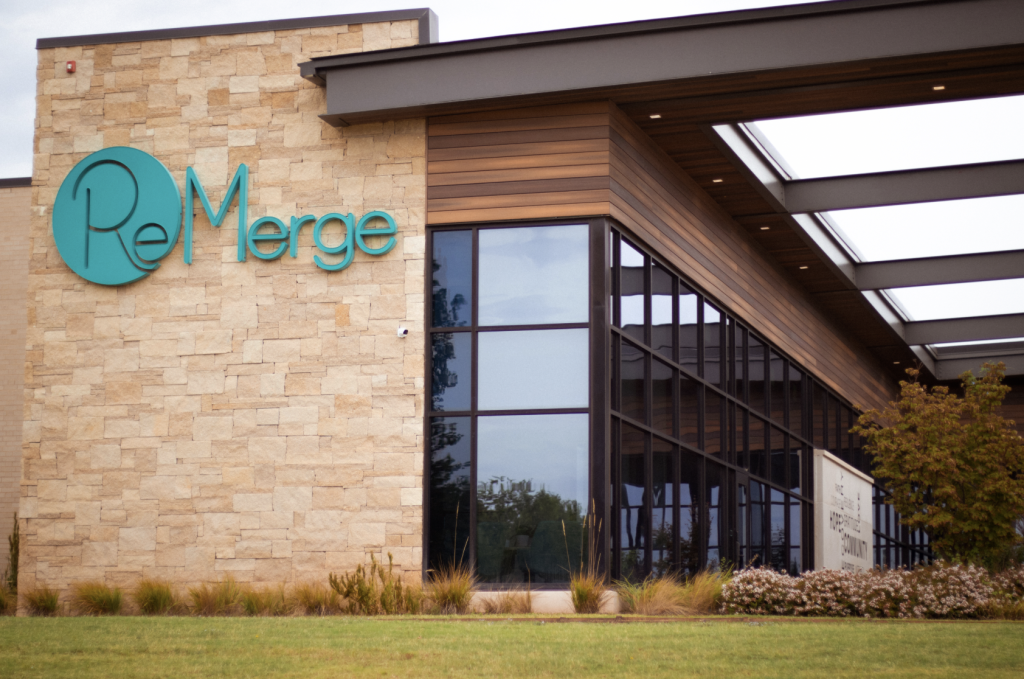
ReMerge is a pre-trial diversion program for high-risk mothers located in Oklahoma City, where they provide access to substance-free housing, food, clothing, addiction recovery, educational classes, and access to mental and physical healthcare services.
We had the pleasure of speaking to ReMerge’s CEO, Erin Engelke, where she emphasized the burdens of trauma, unstable housing, substance use, and limited access to care that the mothers they work with have dealt with in their lives – all disproportionately experienced by Black and Indigenous women in Oklahoma. Through this conversation, we were able to learn not only the systemic origins of women’s criminalization, but what works in terms of support, community, and stability that can break through cycles of incarceration.
We also had the incredible opportunity to speak with and learn from Dr. Romarilyn Ralston, Senior Director of the Claremont Justice Education Center at Pitzer College. Her insight into the carceral system as a formerly incarcerated woman and as an organizer working within higher education taught us the importance of centering lived experience when in an attempt to study incarceration – most research articles published on incarceration are written and researched through the lens of public safety and law enforcement, which does not address the root causes of oppression that leads to incarceration. She spoke to the culture of prisons being harmful – many guards coming from military backgrounds, often leading to seeing folks as enemies that need to be trained and disciplined. We ended our conversation by learning that when rehabilitation programs (ReMerge as an example) are in place, it is crucial to understand that you cannot push someone into healing. Resources can be offered to them which may increase the likelihood of community building and openness to change, but deep down the emphasis has to be on the individual and their willingness to come to said change, to reinvent their lives, have other possibilities and opportunities, and recognize that they are human and deserving.
After our conversation with Dr. Ralston and diving deeper into the idea of positionality and power, we decided that we needed to pivot from only building solidarity, and instead build solidarity while also examining present internal power structures at ReMerge. While we cannot ignore the life changing support that ReMerge offers mothers facing incarceration, we can address inner dynamics that may be reinforcing harmful colonial stereotypes. We noticed that the executive team and much of the leadership at ReMerge is predominantly white, despite working with a population largely composed of women of color. We found issue with this as a mostly white executive board making final decisions about a program grounded in the lives of women of color risks reinforcing colonial patterns, where those with the least lived experience hold the most institutional power.
Once again, we do not want to take away from the fact that ReMerge has done incredible work, but recognizing these internal disparities made us more comfortable as we grappled with understanding how race, class, and positionality operate not only within carceral systems, but also within institutions that are designed to mitigate such harms. As we just explained within the greater context of ReMerge, it was extremely important to us that as white middle-class women we were to stand strong in the idea of learning through this project. In an attempt to build solidarity with ReMerge and Dr. Ralston, we resisted assuming what works/is harmful for incarcerated women and mothers, and instead took a step back and created a space to learn together. We approached this project with the hope of understanding how knowledge, care, and solidarity can be ethically practiced while in conversation with organizations and individuals who work with, or have been impacted by the carceral system in Oklahoma.
Fundraising with the Panzi Foundation
Fundraising with the Panzi Foundation
by Stella Novembre and Skye Cheney
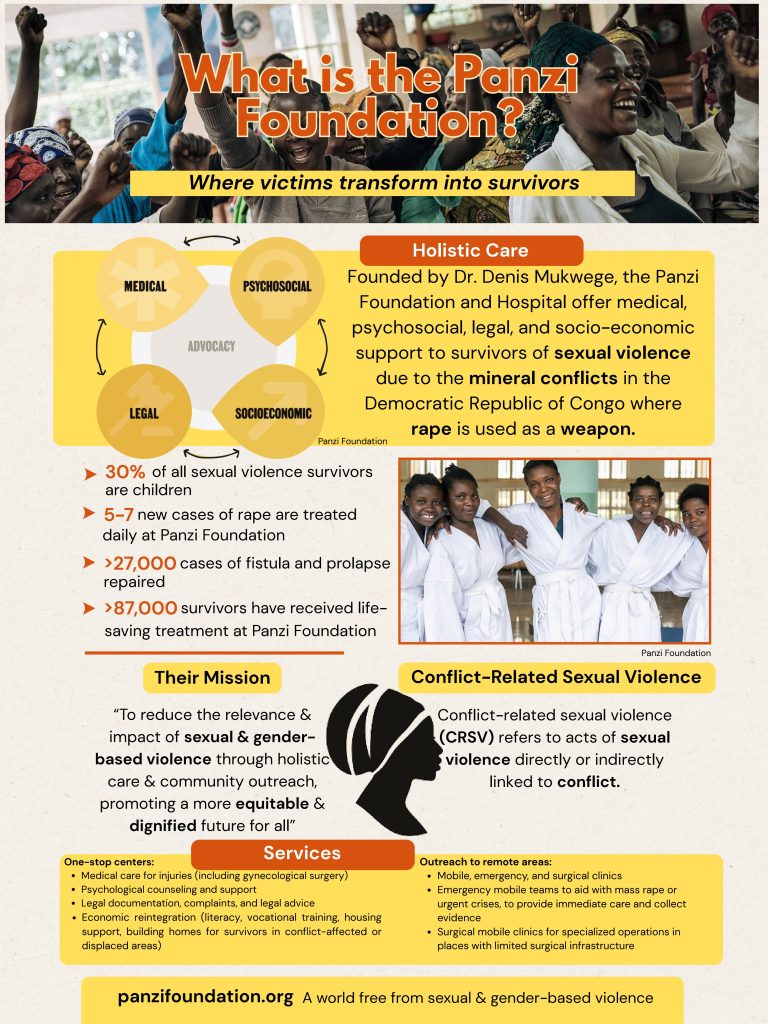
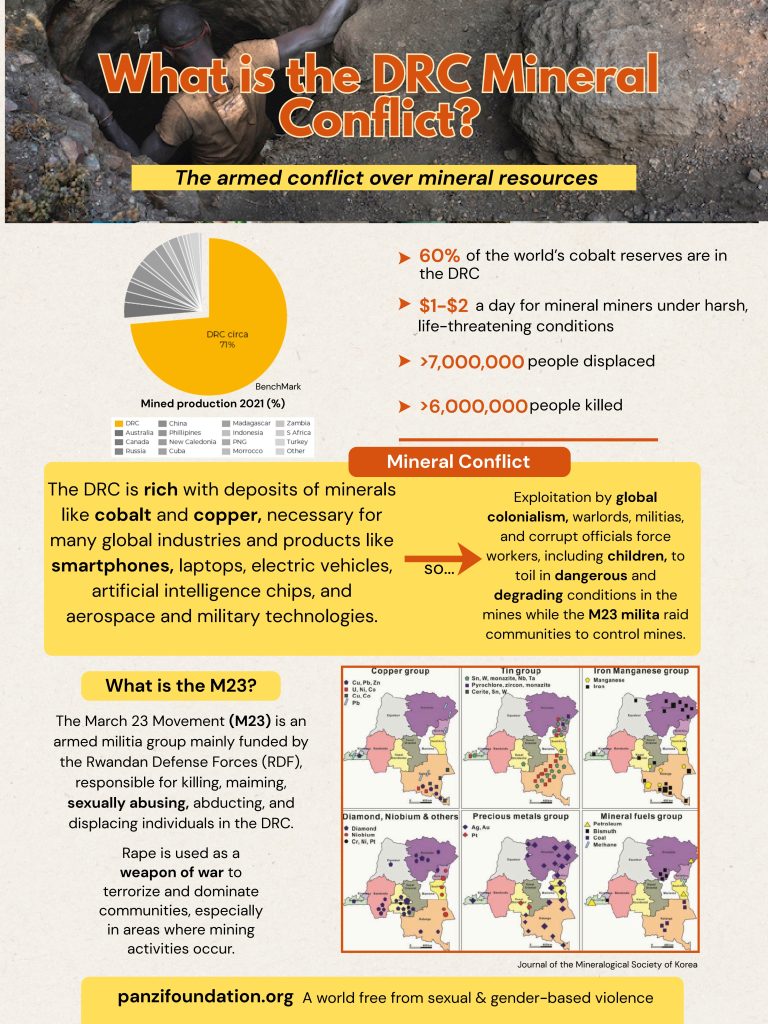
In our project, we worked in solidarity with the Panzi Foundation, an organization that offers medical, psychosocial, legal, and socioeconomic support to women who have experienced sexual violence through mineral conflict in the Democratic Republic of Congo (DRC).
The DRC is rich in mineral resources like cobalt, copper, and gold, which power electronics such as smartphones. People are put through dangerous mining conditions, and militia raid villages of eastern and southern regions of the DRC to control populations and access mines. These militias, like the M23 (March 23 Movement), displace, murder, and sexually abuse millions of individuals, particularly women. Gender-based violence and rape as a weapon in war demonstrate how women are disproportionately targeted and objectified over men and how war tremendously terrorizes innocent civilians.
The Panzi Foundation has One Stop Centers that provide survivors of sexual violence with all four pillars of holistic care in one location, mobile clinics to reach rural communities, an after-care center for therapeutic community-building at Maison Dorcas, and more to support thousands of women.
By watching videos, reading scholarly articles, and learning from the Panzi Foundation website, we laid a foundation to understand this conflict and the statistics surrounding it. We then went more in-depth with the Panzi Foundation: what they do, what their approach is, and which people run the foundation. We reached out to the Administrative Assistant of the Panzi Foundation, who, unfortunately, could not refer us to someone in particular to interview, but still let us host a fundraiser.
We set up an online fundraising platform that we shared with friends and family, raising $275 that goes directly to the Panzi Foundation. We set up a table outside with a QR code for general donations to the platform, custom prints we made of the Panzi logo ($2), and abstract caricature portraits drawn by Macy Manning ($2).
Through this work, we found out the power of solidarity: through our work, we were able to learn more about an important crisis that more people should learn about, spread our knowledge to other people so they’re more aware of their complicities and larger world issues, and raise money so the foundation can continue to do important work.
Understanding colonial patterns through transnational conflict and gender inequalities, this work frames our understanding of how to support a world that empowers women and fights against colonial supply chains. With this project, we hope to inform ourselves and the people around us of the importance of supporting women and understanding how militarization and colonialism horrifically affect individuals, and most importantly, how to combat this with solidarity.
References
https://www.corteidh.or.cr/tablas/r29631.pdf
https://www.theguardian.com/world/2025/jan/27/who-are-m23-rebels-fighting-in-eastern-drc-congo
https://www.genocidewatch.com/single-post/special-report-conflict-minerals-in-the-drc
https://youtu.be/-xSSoIOxP3E?si=lcuLymAs0c9F-Me4 https://youtu.be/eJdktQ97rZ8?si=paQ2RYWfb_WbaeNY
The Hidden Struggle — Food Insecurity
The Hidden Struggle — Food Insecurity
by Kate Schwitzgebel, Nadia Vong, and Kian Jamali
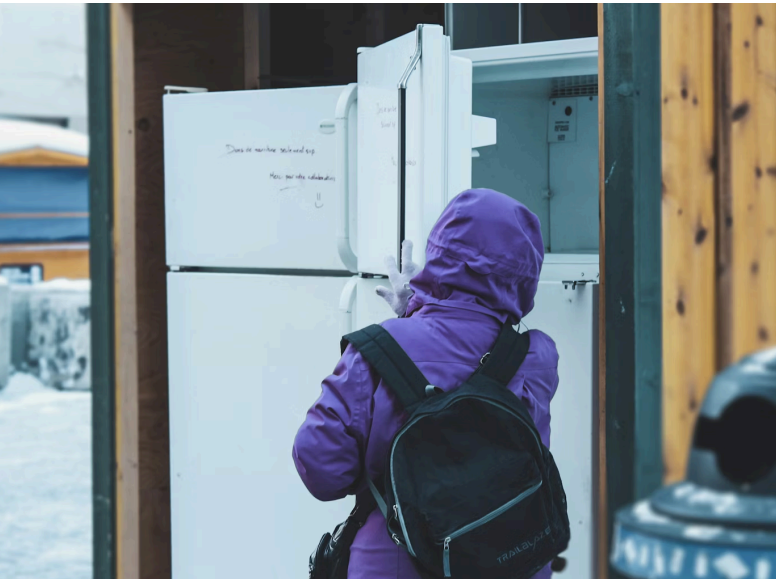
In our project, we want to raise awareness of food insecurity and the ways we can help prevent it. Society needs to dismantle structural barriers that prevent communities, especially Black, Brown, Indigenous, and low-income Californians, from having consistent access to healthy food. Food insecurity can impact people of all genders, races, and ethnicities; however, its effects impact marginalized communities even more. Our goal is to put on display the effects of the “savior complex” and how much that can affect true community engagement.
During this project, we kept in mind that we should avoid places that are corporations, companies that are based only in Western states, or that don’t have communities of different
races, genders, or sexualities. It is important to collaborate with people who have experienced food insecurity before, so they can be the ones educating and helping based on their first-hand experience. Nourish California is an example of one of the organizations we looked into. It is a statewide non-profit organization that is dedicated to transforming California’s food systems so that everyone, no matter their income, race, or background, has access to food. Their website states, “They work with an urgent focus on improving access to food for Californians who face the greatest needs and the starkest inequities.” (Kaiser Permanente).
We were also intrigued by Pomona’s food pantry (“God’s Pantry”). It is located in the
town of Pomona, and it is the largest food bank run by formerly incarcerated and gang-affiliated
individuals. They are concerned about food waste in LA County, and they project that 8 million
pounds of food is wasted. This specific food bank was founded in 2012, and it began for the
students of Chino High School who were dealing with food insecurity. The workers there are
working to “discover themselves and their purpose in life by serving the common good of the
communities” they serve. (Gods Pantry, 2020). We went to take a tour of their facility and were
impressed by the amount of community they had. They had a room where you could get tattoos
removed for free, as many of the people they work with were once affiliated with a gang or had a
rough past. In the back, they had a warehouse that held food from companies such as Target,
Walmart, Kroger, and Costco. These companies take the food that they don’t put out on shelves
and donate it to food banks like God’s Pantry.
We liked how they don’t just focus on the people who have food insecurity, but also the workers. They held classes for the workers, who were paid to attend, to learn about parenting,
sobriety, and how to believe in a new life. The scene of having these workers of different backgrounds creates a statement that social injustice can be worked out through the community.
When doing the tour, our tour guide, Martha, gave us a snippet of her story and how she came to be working at God’s Pantry. She shared in detail about her life and we found it amazing that she
can talk so openly about her past of drug abuse, child harm, and her time in jail. We also found it
interesting that they work with big corporations, as it shows they are working across barriers and
not just in the local community of Pomona. This organization isn’t just helping limit food
insecurity, but also giving chances to minorities. We saw people of color, queer people, and
women all working together to fight food insecurity in the local town of Pomona
Martha’s Story
(God’s Pantry Pomona, CA)
In Southern California? Want to get involved?
Donate
References
California Food Policy Advocates. “Nourish California-Center for Health Equity.”
UCLA Health Equity, https://healthequity.ucla.edu/partners/california-food-policy-advocates/
God’s Pantry. 2020 Annual Report. 2021.
https://www.gods-pantry.org/wp-content/uploads/2021/03/GP-Annual-report-2020.pdf
“Martha’s Story”. YouTube, uploaded by, 5 Aug. 2025,
The History of Medical Reproductive Injustice in the United States: The Exploitation of Black and Indigenous Women
The History of Medical Reproductive Injustice in the United States: The Exploitation of Black and Indigenous Women
by Ronan Kiernan-Johnson, Rosa Graham, Sophie Callahan, Yuan Li, and Lauren Lee
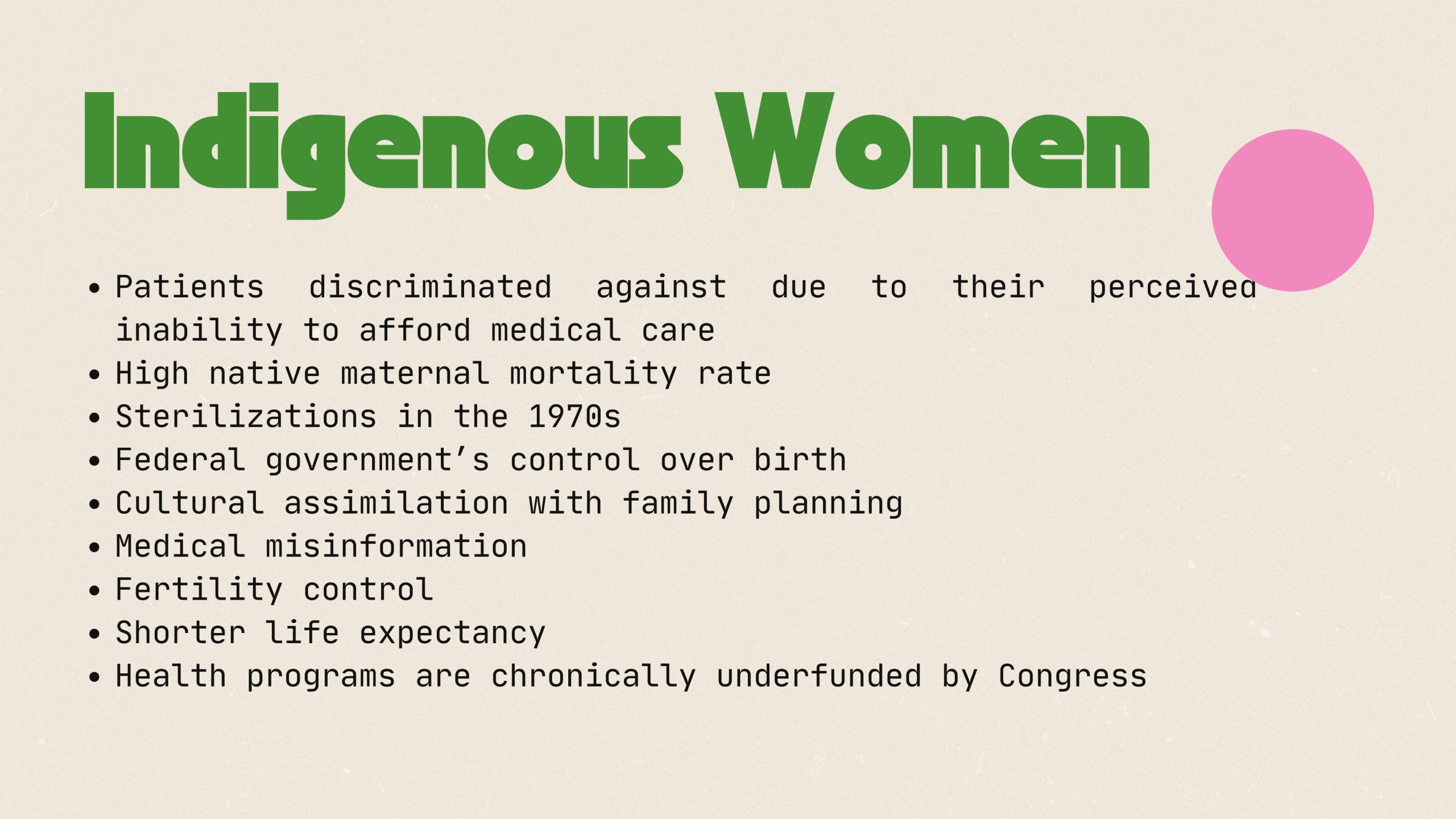
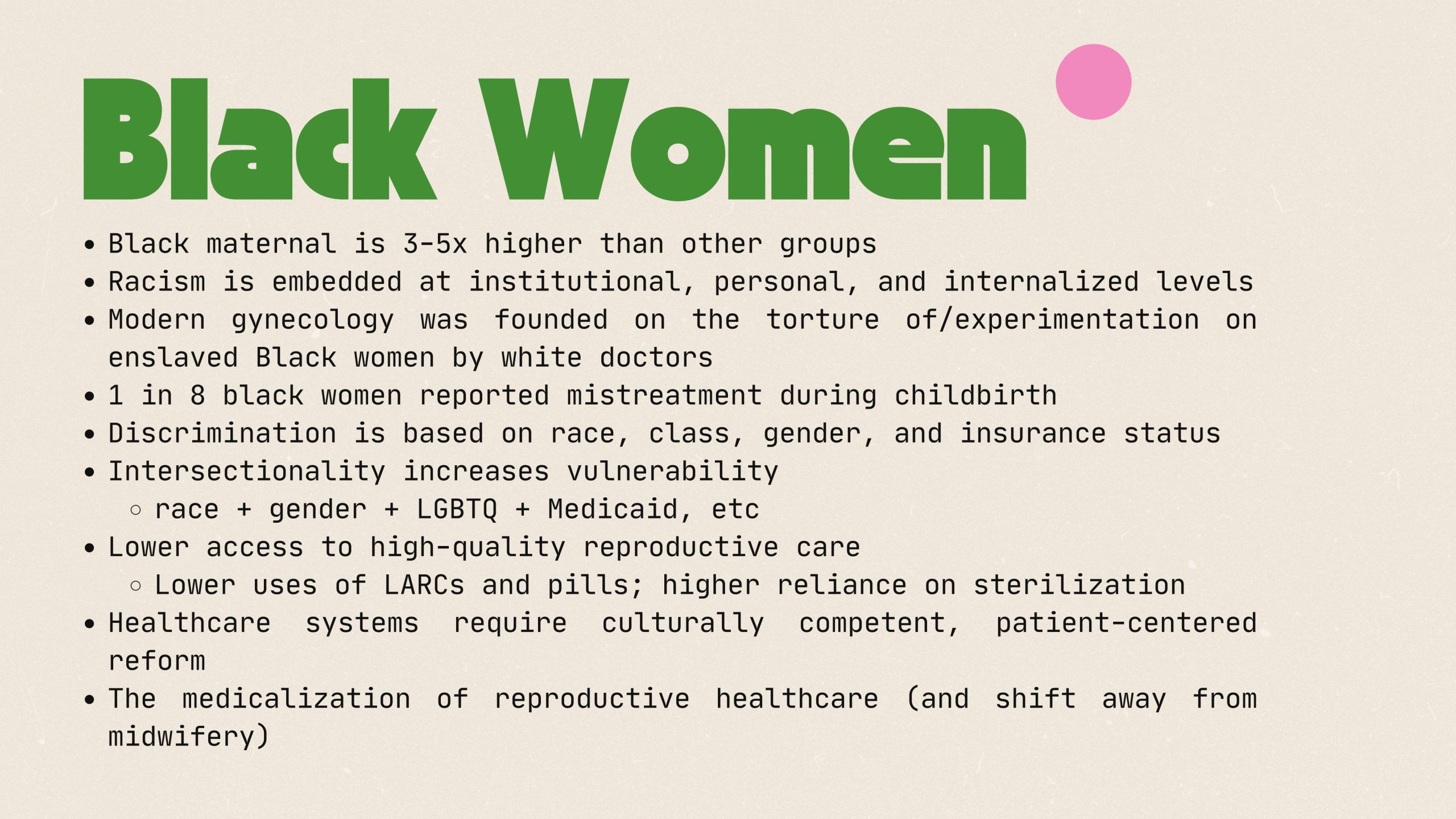
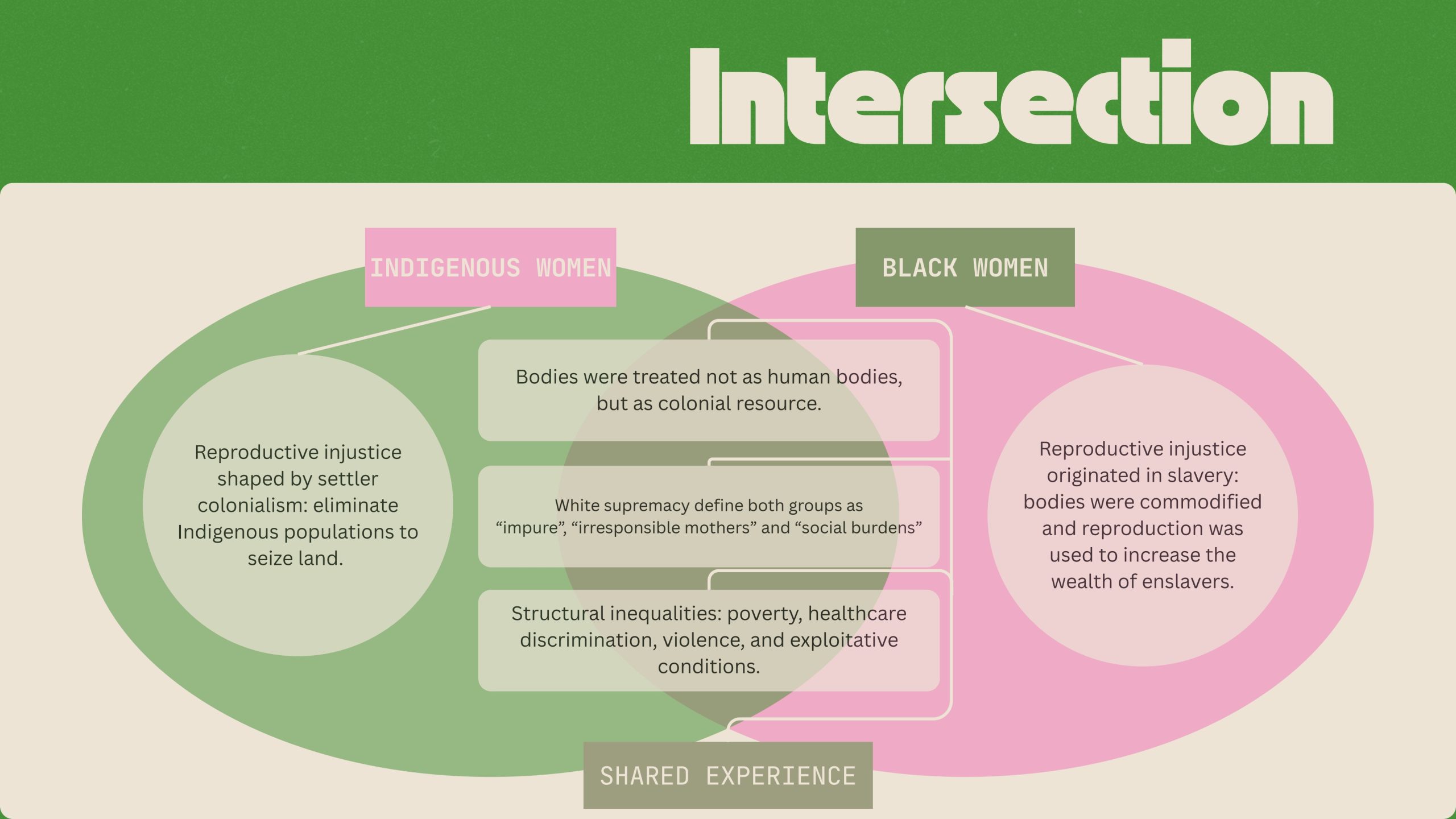
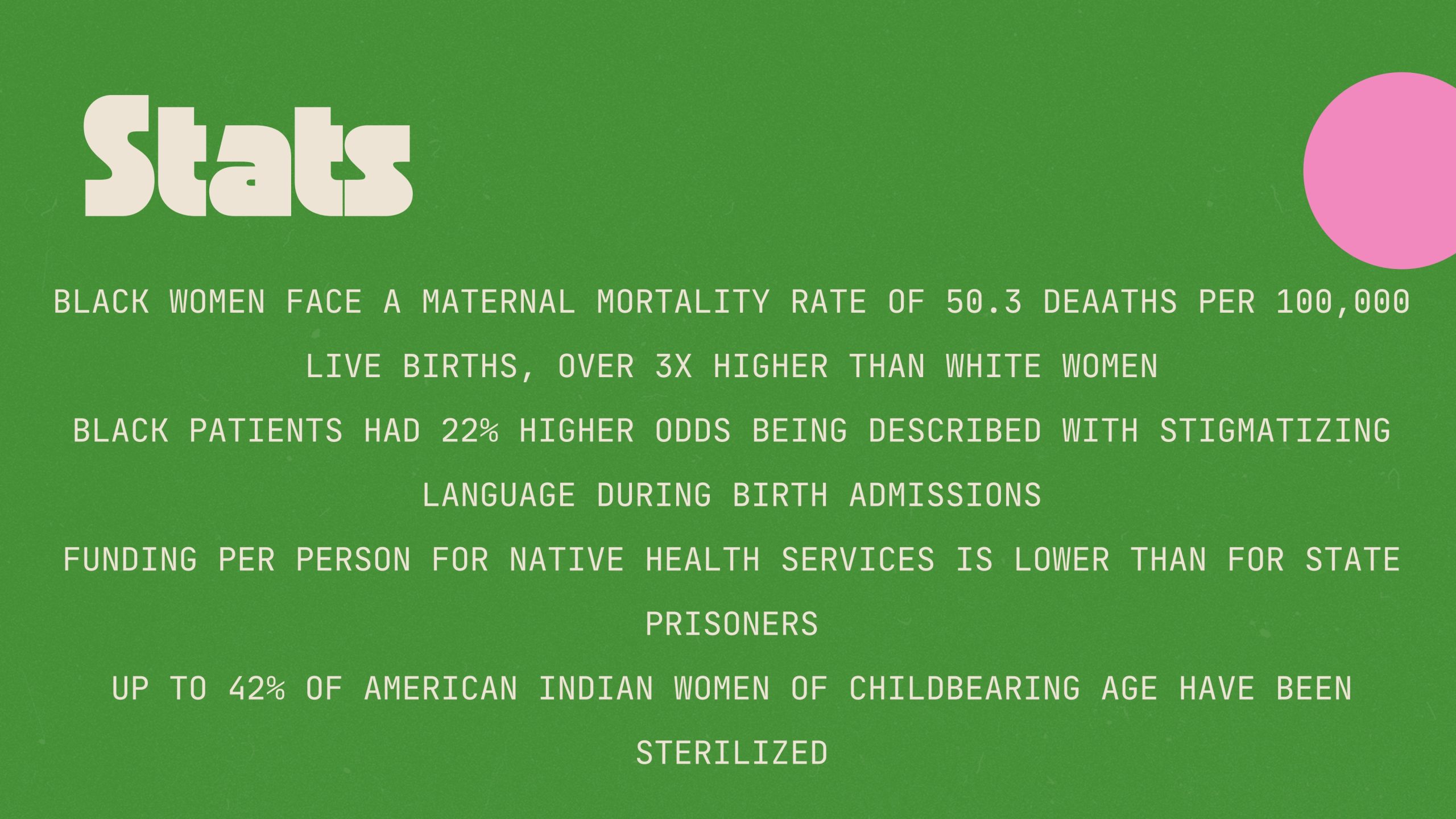
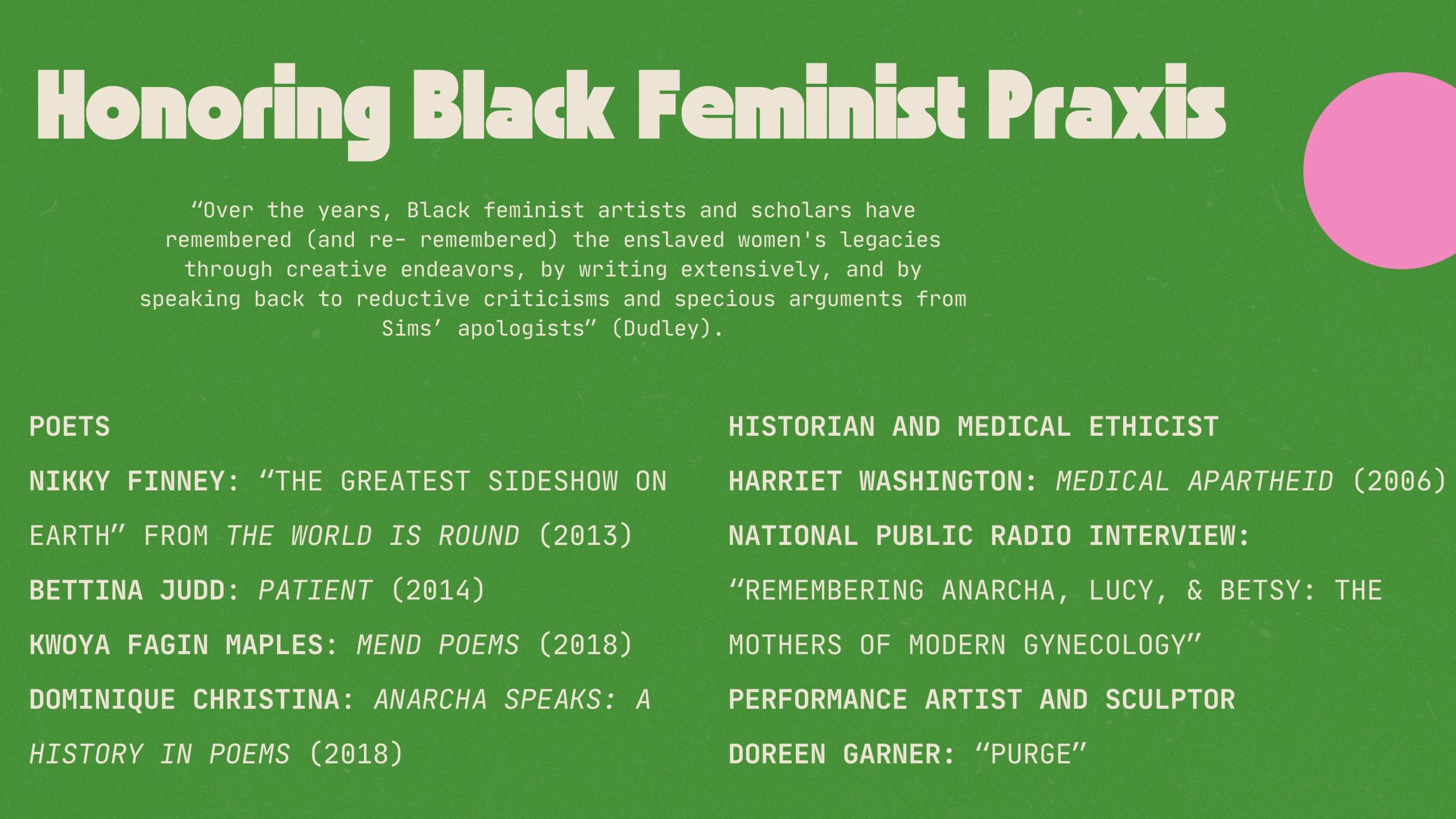
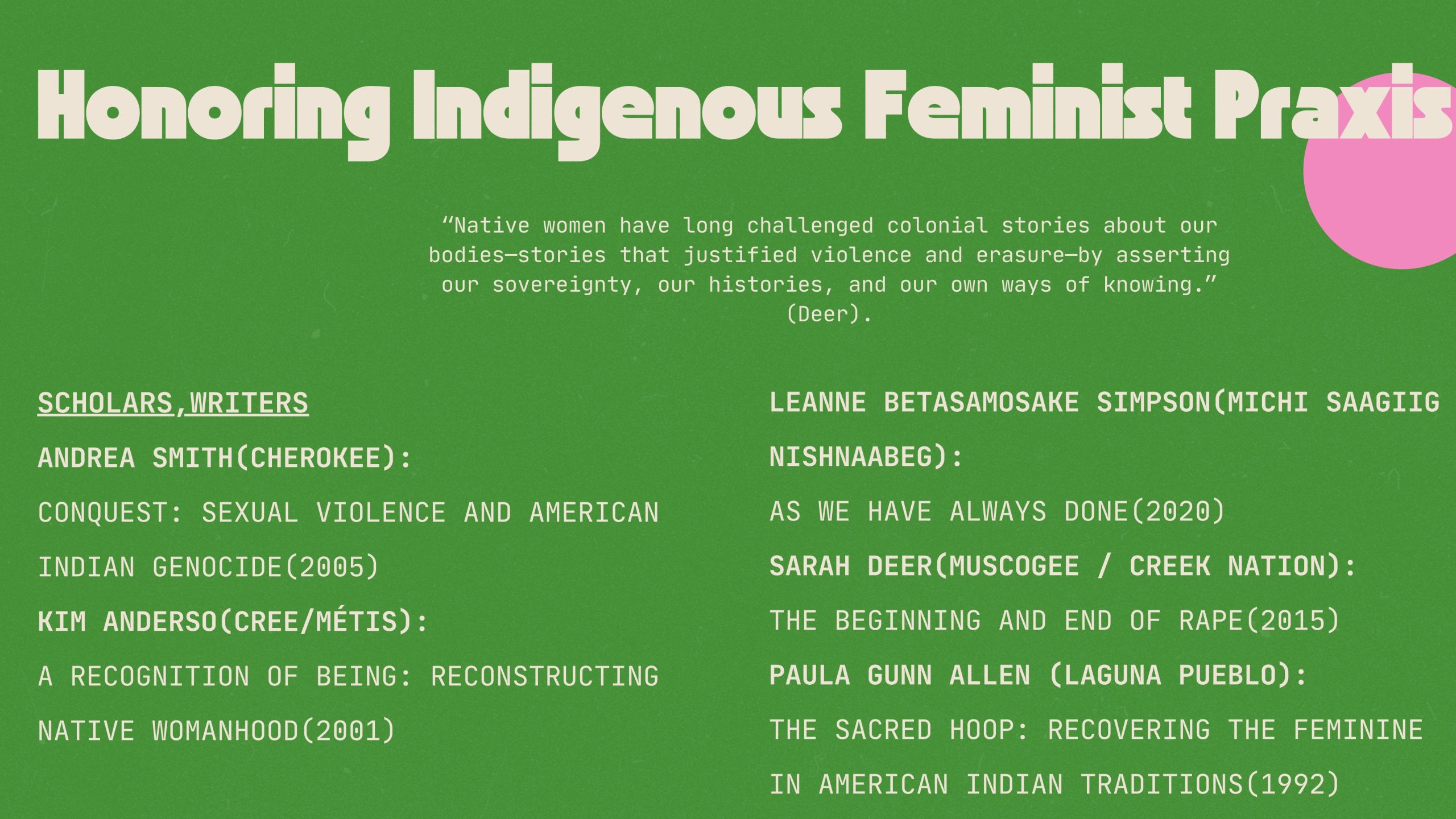
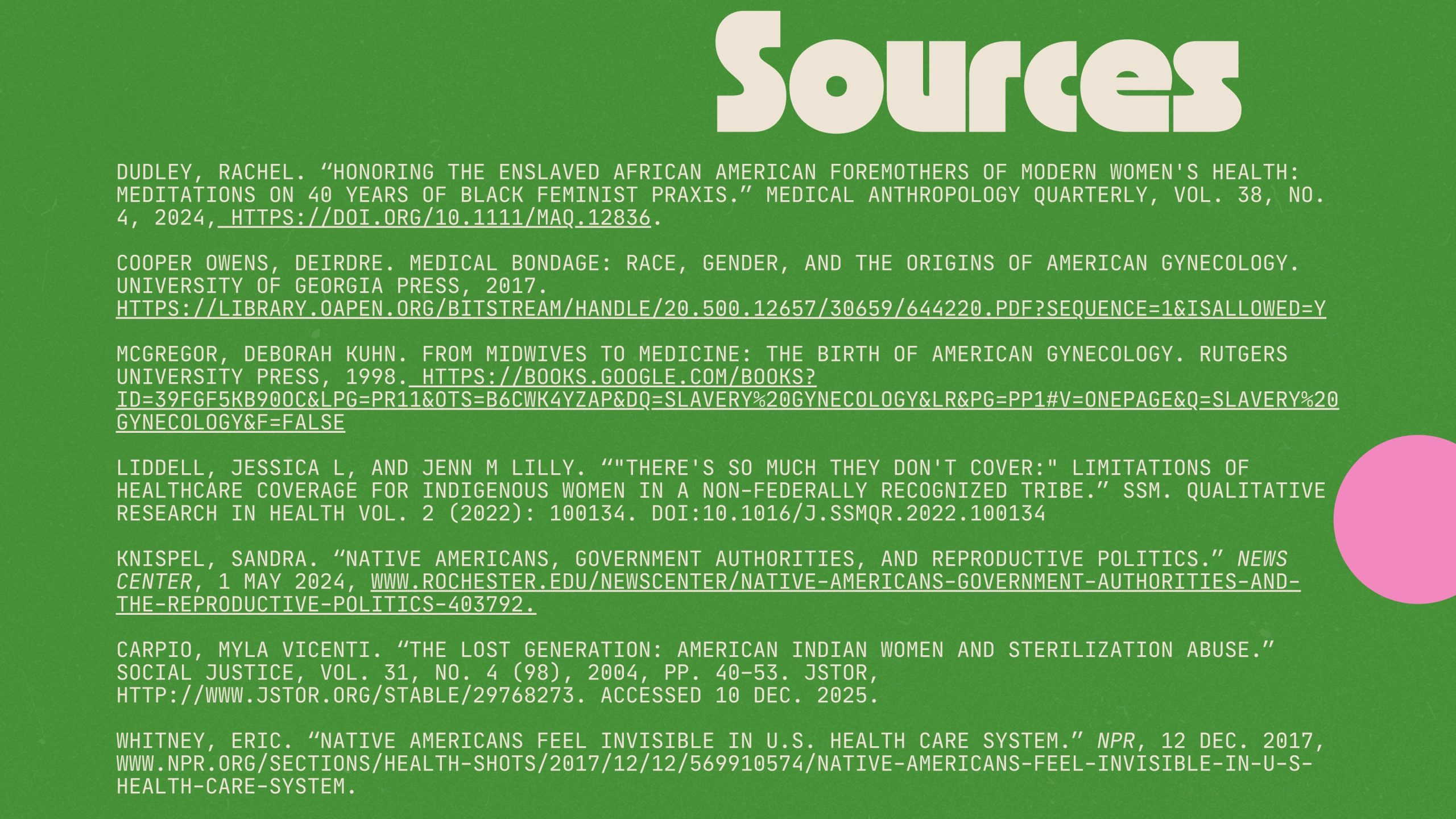
Medical violence and injustice are pressing issues in the United States today, especially against women of color. Many people don’t know the background of this injustice and how it is grounded in the history of the United States, and how colonialism has forced Black and Indigenous women to face difficulties regarding their bodily autonomy and medical rights as a whole.
Our project aims to understand and explore the deep-rooted history of medical reproductive injustice in the United States, specifically directed towards Black and Indigenous women.
When starting the project, we were all very interested in medical injustice and wanted to learn more about how that affected different races, so we decided to team up. We decided to display our final product in a zine, where there was information that was comprehensible to the viewer, with a portion of resources at the end. We added resources that not only allow our viewers to understand the history of medical reproductive injustice in the United States, but also have the tools to reach out and learn more about the issue if they so please.
In our group, we had five members, so we decided that two members would explore medical reproductive injustice towards Indigenous women, and the other three would explore medical reproductive injustice and how that has affected Black women throughout history in the United States. We decided to conduct individual research on subtopics related to the different races we were investigating, and then brought them together to draw similarities and intersectionality.
For example, we decided to focus on the displacement of Black midwives, the historical roots of gynecology, reproductive medical racism against black women, Colonization and Oppression on Indigenous women’s bodies, reproductive health, and lives, and the sterilization of Indigenous women. We were able to find lots of interesting things that helped shape our understanding of medical reproductive injustice in the United States, and something that we were able to understand more deeply is the intersectionality between the two groups, and how gender and colonialism have shaped this injustice.
Although there are clear differences specific to each group, we were able to find a lot of underlying similarities that demonstrate how colonialism has shaped the United States and has left a lasting impact. This furthers anticolonial feminist thought by demonstrating how medical injustice has played a large role in racism and misogyny in the United States.
Korean Comfort Women: Collaboration with Washington Coalition for Comfort Women
Korean Comfort Women: Collaboration with Washington Coalition for Comfort Women
by Charlotte Hahm
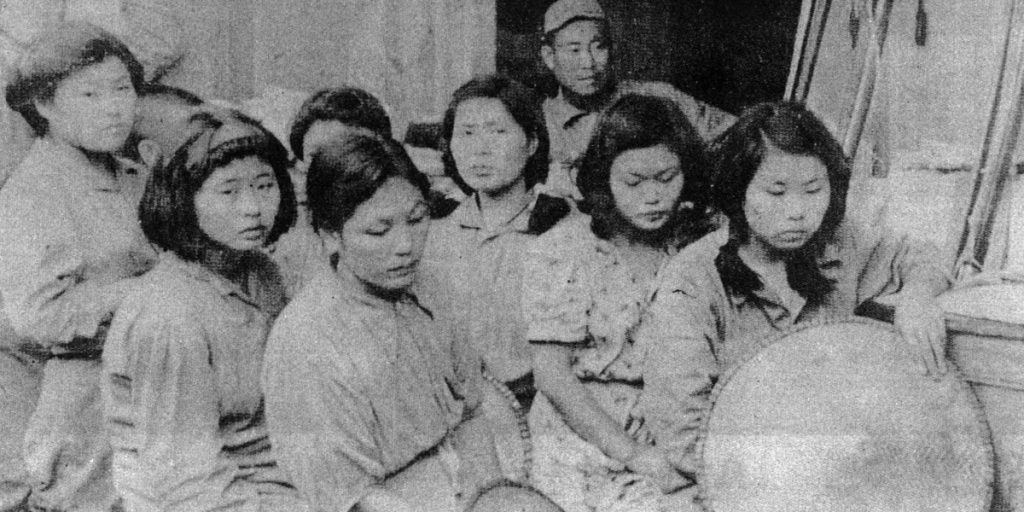
Throughout World War II, over 200,000 young Korean women were kidnapped and coerced to serve as sexual slaves in military brothels throughout Asia and the Pacific by the Japanese military and government. These women, referred to as “comfort women,” endured years of sexual exploitation and complete dehumanization only to be murdered and silenced after the war. Today, less than ten registered Korean comfort women survive.
To combat the Japanese government’s intentions to erase this tragic and horrific history, I have collaborated with members and friends of the Washington Coalition for Comfort Women issues (WCCW) to highlight the comfort women’s voices and not let their stories go untold. My grandmother and grandfather, Dong-Woo Hahm and Doo-Chan Hahm, co-founded the WCCW and dedicated the latter half of their lives towards fighting for recognition and compensation for Korean comfort women. My grandmother and all of the Korean comfort women’s struggles were fueled by their desires to find their political power in a climate that constantly silenced them. I too was fighting from the positionality of a young, Korean-American woman, however, as an American, I have the power to use my voice without the same fear imposed by the U.S. government. This positionality helped me discover the most effective way to use my power publicly and share this history without being ignored due to my identity.
Our collaborative work has focused on collecting my grandmother’s archives from her work with Korean comfort women and attempting to digitize and share her information with the general public. In this way, we can highlight the individual voices of the Korean comfort women, redistributing to them the power of their voice that was once stripped away while also utilizing the internet as a means of spreading information without discriminative barriers. Throughout this ongoing process, communication has been imperative to ensure that each archive discovered is thoroughly reviewed and handled with care across the state-wide barriers that divide our workforce. I am stationed in California, whereas many of the materials are located in Florida. The material is also a form of my grandparents’ intellectual property, so we are discussing ways to share their archives while recognizing their incredible efforts to collect the information. This process has allowed me to continue my grandmother’s legacy and find community among her organization’s succeeding leaders. I also was able to collaborate with another researcher of comfort women issues who focused on Chinese comfort women. This allowed me to continue expanding my own knowledge of Japanese militarism and comfort women history. I hope that we can build solidarity across our fights for comfort women issues, and fight together for recognition of the expansive sexual military crimes committed against women across the globe. If you are interested in following this process to digitize interviews, photographs, videos, and other archives, please reach out to the WCCW’s leaders to connect with me, and stay alert for more information to be shared on their website.